Andrej Karpathy — Autoresearch
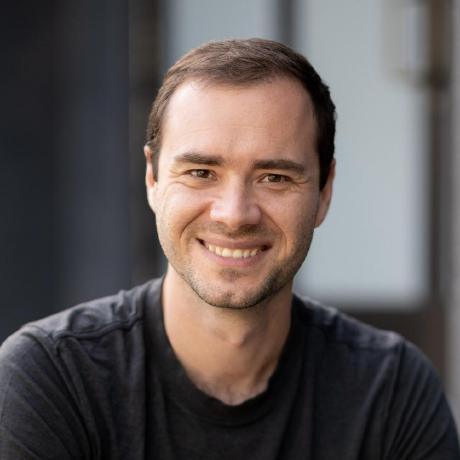
Andrej Karpathy — AI researcher, educator, and entrepreneur.
Founding member of OpenAI. Former Director of AI at Tesla Autopilot. Creator of cs231n, nanoGPT, and micrograd. Founder of Eureka Labs. Stanford PhD under Fei-Fei Li.
This document was autonomously researched using Autoresearch — an AI-powered system that generates research questions, searches the web, writes findings with inline citations, and verifies everything through a three-judge review panel. Built by Alexandru DAN, CEO TVL Tech.
Sections
Stanford PhD, OpenAI, Tesla Autopilot, Software 2.0 thesis
Education and Teachingcs231n, nanoGPT, micrograd, Zero to Hero, pedagogical approach
Views on AI FutureAGI timelines, safety concerns, slopacolypse, Software 3.0
Eureka LabsAI-native school, LLM101n, nanochat, pedagogical model
Key RelationshipsElon Musk, Fei-Fei Li, Ilya Sutskever, collaborations
101 min read · 23,016 words
Intellectual Contributions
Karpathy's intellectual contributions span three mutually reinforcing domains: foundational academic research in multimodal vision-language models (Stanford PhD, 2011–2016), industrial-scale architectural innovation in autonomous driving perception (Tesla Autopilot, 2017–2022), and paradigm-framing conceptual work on neural-network-based programming (Software 2.0, 2017; extended to Software 3.0, 2025). These are not sequential phases but deeply interconnected: the Autopilot work generated the firsthand empirical evidence behind the Software 2.0 thesis; the PhD research established the CNN+RNN and multimodal embedding foundations that informed the vision-only approach at scale; and the Software 2.0 framing shaped the academic data-centric AI research agenda. His two OpenAI stints (December 2015–June 2017, February 2023–February 2024) provide context for earlier RL and web-agent work and the later GPT-era contributions, including the widely adopted "State of GPT" (2023) presentation.
#Role at OpenAI
MEDIUM | HIGH
Review note: Confidence remains MEDIUM. Key dates rely on Tier 2/3 press sources only (June 2017 Tesla start), the Feb 13 vs Feb 14 2024 departure date conflict is unresolved, and the rationale for the 2017 OpenAI→Tesla transition has no Tier 1 primary source. Eureka Labs date conflict resolved — July 2024 confirmed by [26][27]. Depth remains HIGH — coverage within what is documented is thorough.
Andrej Karpathy was one of OpenAI's founding members, joining in December 2015 as a Research Scientist alongside Sam Altman, Elon Musk, Ilya Sutskever, Greg Brockman, and others. His first stint (2015–2017) focused on deep learning applied to computer vision, generative modeling, and reinforcement learning.
Among his notable projects at OpenAI was World of Bits (2016–2017), a platform for training web-based agents that controlled software environments through simulated keyboard and mouse input. The resulting paper, "World of Bits: An Open-Domain Platform for Web-Based Agents" (ICML 2017), was co-authored with Tianlin Shi, Linxi Fan, Jonathan Hernandez, and Percy Liang. He also contributed to OpenAI Universe, the broader platform enabling AI agents to interact with software via visual interfaces. On his personal blog he published "Deep Reinforcement Learning: Pong from Pixels" (May 2016), applying policy gradient methods to Atari environments using OpenAI Gym.
Karpathy left OpenAI in June 2017 to become Tesla's Director of Artificial Intelligence and Autopilot Vision, reporting directly to Elon Musk — no primary statement from Karpathy has surfaced explaining that specific transition, and the "Musk recruited him" framing is press-derived (Tier 2/3). After leaving Tesla in July 2022, he announced his return to OpenAI on February 9, 2023, stating: "I am very inspired by the impact of their work and I have personally benefited greatly from it. The future potential is especially exciting." [2] His second stint centered on building a new team focused on midtraining and synthetic data generation. [UNVERIFIED — no primary or press source is cited for this specific team focus; the return announcement tweet [2] states enthusiasm for OpenAI's work but does not name a focus area.] He also delivered the widely-shared public talk "State of GPT" at Microsoft Build 2023 (May 23, 2023), covering the full GPT training pipeline — pretraining, supervised fine-tuning, reward modeling, and RLHF — and offering practical guidance on prompting, retrieval-augmented generation, and agent design. The slide deck is hosted directly on his personal site (karpathy.ai/stateofgpt.pdf), making it a Tier 1 primary record of his thinking. [8][9]
He left OpenAI a second time on February 13, 2024. In his own words: "nothing 'happened' and it's not a result of any particular event, issue or drama... Actually, being at OpenAI over the last ~year has been really great — the team is really strong, the people are wonderful, and the roadmap is very exciting. My immediate plan is to work on my personal projects and see what happens." He cited a desire to pursue personal projects, and subsequently announced Eureka Labs in July 2024. In a 2025 interview with Dwarkesh Patel, he reflected critically on OpenAI's early RL-on-games approach as "a misstep that even the early OpenAI that I was a part of adopted," while also describing the original AGI definition as "a system you could go to that can do any economically valuable task at human performance or better."
Uncertainty:
- Why Karpathy left OpenAI in 2017 to join Tesla has no primary source explanation. The "June 2017" departure month is sourced from press only (Tier 2/3); no Tier 1 primary source confirms the exact month.
- Date conflict (Feb 13 vs 14 2024): The body text states "February 13, 2024" for his second departure, but the source label in the Sources section reads "Feb 14 2024". Cannot resolve without revisiting the primary tweet.
- Eureka Labs date conflict: ~~RESOLVED~~ July 2024 confirmed by Tier 1 sources [26][27]. See Eureka Labs section.
- His specific individual contributions to particular model releases during his second stint are not publicly attributed.
#The 'Software 2.0' Thesis (2017)
HIGH | HIGH
On November 11, 2017, while serving as Tesla's Director of AI and Autopilot Vision, Karpathy published "Software 2.0" on his Medium blog [55][56]. The essay's central argument is that neural networks constitute a new programming paradigm — not merely powerful tools layered atop conventional software, but a qualitatively different way of writing programs. Karpathy labeled traditional handwritten code Software 1.0 and neural-network-based systems Software 2.0 [55].
In Software 1.0, a human programmer specifies each instruction explicitly in a language such as C++ or Python. In Software 2.0, the program is written in "a much more abstract, human unfriendly language — the weights of a neural network." [55] The developer's role transforms: rather than designing algorithms, they specify a goal on the behavior of a desirable program, write a neural net architecture (identifying a subset of program space to search), and use computational resources to find weights that satisfy that goal [55]. The dataset is, in effect, the specification; training is compilation; weights are the executable. No human writes the resulting code directly — it emerges from optimization [55].
The essay's most concrete evidence came from Karpathy's firsthand work on Tesla Autopilot, lending the thesis industrial-scale empirical grounding unavailable to most academic formulations of similar ideas [55][58]. He observed that Autopilot's hand-written C++ codebase was being "eaten" by neural networks — as the AI improved, explicit software modules were replaced and deleted [55]. Capabilities that would be impossible or impractical to encode as rules — stitching information across multiple cameras, handling temporal sequences — were instead learned from data [55]. Alongside this evidence, Karpathy enumerated genuine advantages of the approach: it works in problem domains where explicit rule-writing is intractable (computer vision, speech recognition, game playing), scales continuously with more data, and leverages distributed compute infrastructure efficiently [55]. He also documented structural challenges: neural networks are opaque and difficult to debug by conventional means, exhibit novel failure modes (adversarial examples, overfitting, distributional shift), and create accountability gaps around interpretability, bias, and equity [55].
The post immediately circulated among ML practitioners and generated multi-sided debate. A Hacker News re-submission in February 2023 — five years after publication — accumulated 422 points and 330 comments, with substantive and largely skeptical discussion: experienced developers challenged the suitability of probabilistic, opaque systems for correctness-critical applications (financial software, safety systems), while supporters documented domain-specific successes in fraud detection, content moderation, and autonomous driving [57]. In a direct critical response on Medium, Carlos E. Perez argued that the framing added fuel to "the Deep Learning hype machine," while acknowledging that the term gave a name to a paradigm "that many had implicitly in their heads" [60]. Seth Weidman wrote a further response engaging with the thesis on its technical merits [61]. Karpathy subsequently expanded the essay into a full conference talk, "Building the Software 2.0 Stack," delivered at Databricks' Spark+AI Summit in 2018 [58][62], adding operational depth on data curation workflows, tooling requirements for iterative dataset management, and the advantages and challenges of the paradigm as observed at scale in Autopilot development [58]. A Hacker News thread on the talk extended the debate about dataset management as the new engineering bottleneck [58].
The essay's most traceable structural influence is on the academic framing of "data-centric AI." The documented lineage runs through Stanford's Hazy Research group (Professor Chris Ré) in two clearly sourced steps. A February 2020 Hazy Research blog post documents the first step — the group adopting Karpathy's terminology after both the essay's publication and a lab visit: "We started out by calling this paradigm 'data programming' but eventually migrated to the (much better) name Software 2.0 after Andrej Karpathy wrote his blog post and visited the lab." [89] A July 2021 Hazy Research post then documents the onward naming chain explicitly: "Eventually, we turned to others and called this 'Software 2.0' (inspired by [Karpathy's post]). After the octopus got venture funding, professionals started calling it data-centric AI. Recently Andrew Ng found this to be a not-totally-embarrassing name and gave a great talk about his perspective on this direction." [59] The "octopus" refers to Snorkel AI, the venture-backed startup spun from Hazy Research's data programming work (~2019); "data-centric AI" emerged as an enterprise-friendly rebranding at that point.
Andrew Ng's public launch of the "data-centric AI" movement — a March 24, 2021 DeepLearning.AI talk titled "A Chat with Andrew on MLOps: From Model-centric to Data-centric AI" [90], followed by a competition and the NeurIPS 2021 Data-Centric AI Workshop [92] — gave the framing dramatically broader reach. In his canonical IEEE Spectrum interview (February 9, 2022), Ng defined it as "the discipline of systematically engineering the data needed to successfully build an AI system," arguing that neural network architectures had become "basically a solved problem" for many applications, shifting the productive lever to data quality [91]. Ng did not cite Karpathy, Hazy Research, or Snorkel in any accessible public statement about data-centric AI — his accounts attribute the ideas to his own practical experience at Landing AI. The Hazy Research posts thus provide the only explicit documentation of both the "Software 2.0" naming credit to Karpathy and Ng's role as a later amplifier rather than the originator of the terminology. Karpathy's framing is paradigmatic — explaining what neural networks are ontologically (programs written in weights) — while Ng's data-centric AI movement is methodological: prescribing how practitioners should spend their time. The essay served as a conceptual bridge between practitioner observation at Tesla and a systematic research agenda treating data engineering — not model architecture — as the primary lever for ML system improvement.
The Software 2.0 framing proved durable in Karpathy's own thinking. By 2025–2026, he continued using it as his primary analogy for computing paradigm shifts, describing AI as "a new computing paradigm (Software 2.0)" when comparing AI's macroeconomic impact to electricity or the industrial revolution [63]. He extended the framework in 2025 to "Software 3.0," in which natural language becomes the primary programming interface — LLMs as the new runtime, prompts as the new source code [63].
Uncertainty:
- The exact clap count and view count for the original Medium post are not accessible; Medium returns a 403 on direct fetch. No secondary source documents these metrics.
- The Spark+AI Summit 2018 talk video (YouTube ID y57wwucbXR8 per Tenstorrent [62]) was not independently verified against Databricks' official conference archive in this research pass.
- The publication date of November 11, 2017 is sourced from the announcement tweet timestamp [56] and secondary coverage; the Medium post itself was not directly fetchable to confirm the internal datestamp.
- ~~UNVERIFIED~~ RESOLVED — Andrew Ng / data-centric AI: The Hazy Research Feb 2020 post [89] and July 2021 post [59] document the full influence chain: Hazy Research adopted "Software 2.0" from Karpathy's essay and lab visit; the "data-centric AI" label emerged ~2019–2020 via Snorkel AI; Ng adopted and amplified the term from March 2021 onward [90][92]. Ng does not cite Karpathy in any accessible source — confirmed by exhaustive search of his public IEEE Spectrum interview [91], Landing AI page, and related talks.
#The 'Software 3.0' Thesis (2025)
HIGH | HIGH
Karpathy's extension of the Software 2.0 framework to "Software 3.0" was formally and comprehensively articulated in a keynote titled "Software Is Changing (Again)," delivered at Y Combinator's AI Startup School in San Francisco on June 18, 2025 and published to the YC Library the following day [63]. The talk built on a line of public thinking Karpathy had been developing since at least January 2023.
Precursors. The earliest public signal was a January 24, 2023 standalone tweet: "The hottest new programming language is English" [94]. The formulation circulated widely and remained his pinned tweet. In February 2025, he coined the term "vibe coding" to name the practical experience of programming entirely through LLM prompts: "There's a new kind of coding I call 'vibe coding', where you fully give in to the vibes, embrace exponentials, and forget that the code even exists. It's possible because the LLMs (e.g. Cursor Composer w Sonnet) are getting too good... I 'Accept All' always, I don't read the diffs anymore... It's not too bad for throwaway weekend projects, but still quite amusing. I'm building a project or webapp, but it's not really coding — I just see stuff, say stuff, run stuff, and copy paste stuff, and it mostly works." [93] The term entered common developer usage within weeks.
The formal thesis. At the YC AI Startup School keynote, Karpathy laid out three programming paradigms as a numbered progression [63][95]. Software 1.0 is traditional handwritten code: a human programmer specifies each instruction in C++, Python, or similar languages, and a CPU executes it. Software 2.0 replaces explicit instructions with neural network weights: the programmer specifies a goal and architecture, and an optimizer (backpropagation + stochastic gradient descent) searches for weights that satisfy the goal — the dataset is the specification, training is compilation, and the weights are the executable. Software 3.0 is the new paradigm: LLMs are the substrate, and the programmer writes prompts in natural language. In Karpathy's own words from the talk announcement: "LLMs are a new kind of computer, and you program them in English. Hence I think they are well deserving of a major version upgrade." [95] The Software 3.0 label follows directly from his observation that Software 2.0 "ate" Software 1.0 at Tesla — C++ code replaced by neural networks — and that Software 3.0 is now eating both: LLM-based systems are absorbing tasks that were previously handled in traditional code or trained neural networks [63].
LLMs as a new kind of computer. A substantial part of the YC talk develops the analogy between LLMs and earlier computing infrastructure. The three dominant analogies Karpathy employed [63]: LLMs as utilities — lab CAPEX builds the model (analogous to building a power grid), then the model is served via metered, pay-per-token OPEX APIs (analogous to electricity sold per kilowatt-hour); when major LLMs go offline, he called it an "intelligence brownout." LLMs as chip fabs — the CAPEX required to train frontier models is enormous and the technology tree evolves rapidly, structurally resembling semiconductor fabrication facilities. LLMs as operating systems — LLM labs are vertically integrated as the fab and OS vendor combined; a whole ecosystem of applications builds on top of the model-as-OS. The overall framing: "We are in the 1960s of AI computing" — cloud-based, centralized access, analogous to timeshare mainframes before personal computers.
LLMs as "people spirits." Karpathy introduced a novel psychological frame for LLMs as computational entities in the talk [63]. Because LLMs are trained on human-generated text, they have emergent psychology — a kind of simulated personhood. He called them "stochastic simulations of people" or "people spirits." This framing motivates two specific capability profiles he documented. Jagged intelligence: LLMs can solve hard mathematical problems but fail on simple comparisons like "which is bigger, 9.11 or 9.9?" — capabilities do not correlate linearly as they do in humans, producing an uneven profile that is unintuitive to reason about. Anterograde amnesia: LLMs do not consolidate long-running knowledge after training ends; their only persistent memory is the context window, making them behave like a colleague with short-term memory loss (Karpathy referenced Memento and 50 First Dates as analogies). He argued this creates a missing learning paradigm he described as "system prompt learning" — genuine in-context adaptation that persists.
Natural language as programming interface; agents as the decade opportunity. Karpathy's practical implications for developers follow directly from the Software 3.0 framing [63]. Prompts are programs, written in English, executed by LLMs — and because the programming language is English, software creation is now accessible to anyone who can describe what they want, not just those who can code. He labeled 2025–2035 "the decade of agents," noting that 2025 is not the year of agents but rather the beginning of a decade-long build-out. He cautioned against over-indexing on full autonomy in the near term, recommending a design pattern he called the Autonomy Slider — products where the level of AI initiative can be dialed from fully human-directed to fully autonomous, with Tesla Autopilot Levels 1–4 and Cursor's assistant modes as illustrative examples. He also argued that LLMs are a third primary consumer of digital information alongside humans (via GUIs) and programs (via APIs), and urged developers to design agent-accessible interfaces: markdown-readable documentation, llms.txt files (analogous to robots.txt), and direct API access rather than GUI-only affordances.
Relationship to Software 2.0. The three-paradigm framework is explicitly continuous with the 2017 essay. The progression is not a repudiation but an extension: each paradigm expands the space of "programs" that can be created. Software 2.0 required specifying a training objective and architecture — a significant reduction in implementation burden over Software 1.0, but still demanding technical skill. Software 3.0 reduces the burden further: the entire "program" is written in English, requiring no knowledge of model architectures, optimizers, or loss functions. The 2023 "hottest new programming language" tweet [94] was the hinge: Software 2.0 made neural networks the substrate; Software 3.0 made natural language the interface to that substrate. The essay's original observation — that Software 2.0 was "eating" Software 1.0 — has been extended: Software 3.0 is now absorbing both prior paradigms.
Uncertainty:
- The YC Library page for the talk is JavaScript-rendered and was not directly parsed as text in this research pass; talk content is sourced from Karpathy's own announcement tweet [95] (Tier 1), the YC library page description recovered via secondary sources, and a Tier 3 full transcript (singjupost.com). Specific verbatim quotes from the talk body (e.g., "people spirits," "intelligence brownout," the OS analogies) are sourced from the Tier 3 transcript rather than a Tier 1 direct fetch of the talk video or official transcript.
- The "vibe coding" tweet [93] was retrieved with full text from secondary sources; the direct X page was not independently fetched in this research pass.
- The YouTube video ID for the YC talk (LCEmiRjPEtQ) was not independently verified against the YC Library page embed in this research pass.
- No secondary press (Tier 2) coverage was identified that substantially extends beyond what Karpathy stated in the primary talk and tweets. The Analytics Vidhya and similar writeups summarize the talk content but do not add independent reporting.
#Tesla Autopilot: The Vision-Only Approach (2017–2022)
HIGH | HIGH
Karpathy served as Director of Artificial Intelligence and Autopilot Vision at Tesla from June 2017 to July 13, 2022 — approximately five years [10][11][19]. He reported directly to Elon Musk and led the team responsible for computer vision, neural network architecture, data infrastructure, and the core Autopilot and Full Self-Driving (FSD) pipeline [19][24].
The vision-only strategic bet. The defining technical commitment of Karpathy's tenure was Tesla's pivot to a camera-only perception system, eliminating radar and LiDAR in favor of pure neural network processing from eight cameras. In his CVPR 2021 Workshop on Autonomous Vehicles keynote (June 20, 2021), Karpathy stated: "Gave a talk at CVPR over the weekend on our recent work at Tesla Autopilot to estimate very accurate depth, velocity, acceleration with neural nets from vision. Necessary ingredients include: 1M car fleet data engine, strong AI team and a Supercomputer." [69] The CVPR talk demonstrated that vision-only neural networks could match or exceed radar-fused systems for depth, velocity, and acceleration estimation — the core sensing tasks for autonomous driving — at fleet scale [69][72]. Tesla formally removed the forward-facing radar from the Autopilot algorithm during Karpathy's tenure, betting that the combination of scale (approximately 1 million vehicles equipped with eight cameras [69]; 1.5 million per the later AI Day 2021 transcript [24]), data infrastructure, and neural network capacity would outperform sensor-fusion approaches that had remained difficult to generalize beyond mapped environments [72].
Tesla AI Day 2021 (August 19, 2021). Karpathy gave the centerpiece technical presentation at Tesla's first public AI Day, providing a detailed end-to-end account of the Autopilot neural network stack [24][73]. His organizing metaphor: "We are effectively building a synthetic animal from the ground up." [24] The presentation documented four interrelated architectural components [24]. At the foundation was HydraNet, a shared backbone combining a RegNet residual network for feature extraction and BiFPN for multi-scale feature fusion, with multiple task-specific heads enabling approximately 50 engineers to work in parallel on specialized capabilities before backbone retraining. A temporal memory system — a feature queue paired with a spatial recurrent neural network — maintained knowledge of road geometry and occluded objects across frames. Multi-camera fusion was achieved through transformer modules enabling the network to reason about objects spanning multiple camera views simultaneously. The full processing pipeline ingested eight cameras at 1280×960 pixel resolution, 12-bit integer image data, at 36 Hz, converting raw image data into a 3D "vector space" representing lanes, curbs, traffic signs, vehicles, and their spatial relationships.
The Tesla Data Engine. A central operational contribution Karpathy documented at both CVPR 2021 and Tesla AI Day was the iterative data engine — the closed-loop infrastructure linking the deployed fleet to training data collection. The dataset presented at CVPR 2021 comprised 1.5 petabytes, 6 billion labeled objects, and 1 million 10-second videos [70]. Tesla deployed 221 manually-implemented triggers across its fleet to identify specific training scenarios — edge cases, rare events, failure modes — enabling targeted data collection at scale [70]. For the Autopilot release covered at CVPR, this training loop ran seven complete cycles [70]. The approach treated the million-car fleet not merely as a product but as a continuously improving data-generating instrument, with data collection precisely steered by engineering decisions.
Tesla Autonomy Day 2019. Karpathy also participated in Tesla's earlier Autonomy Day (April 22, 2019), where the company publicly presented its custom Full Self-Driving computer chip and the broader FSD AI architecture [23]. The event was Tesla's first comprehensive public disclosure of its autonomous driving system design and marked the debut of its in-house neural processing hardware.
Departure (July 13, 2022). Karpathy announced his departure on July 13, 2022, following a four-month sabbatical that had begun in late March 2022 [10][25]. His departure tweet stated: "It's been a great pleasure to help Tesla towards its goals over the last 5 years and a difficult decision to part ways." [10] In subsequent public statements, he cited a desire to pursue personal projects in AI, open source, and education, saying he had "no concrete plans for what's next" but intended to "revisit my long-term passions around technical work." [14][15] Musk responded the same day: "Thanks for everything you have done for Tesla! It has been an honor working with you." [11] Press reporting framed the exit as a significant loss for the Autopilot team, coming days after Tesla had laid off 229 data annotation employees in San Mateo [15].
Legacy within Karpathy's intellectual trajectory. The technical work at Tesla forms the empirical foundation for the "Software 2.0" thesis [55]: Karpathy's observation that handwritten C++ modules were being displaced by trained neural networks was drawn directly from Autopilot development. The data engine architecture he described — iterative fleet-scale data collection, targeted trigger deployment, human-in-the-loop labeling combined with neural network bootstrapping — anticipated later industry thinking about data-centric AI development. The CVPR 2021 talk and Tesla AI Day 2021 presentation together represent Karpathy's most detailed public disclosure of how large-scale industrial vision AI is developed and operated.
Uncertainty:
- Karpathy's exact role at Tesla Autonomy Day 2019 is not confirmed at the primary level; press coverage [23] describes the event but does not specify whether Karpathy presented or only attended.
- The specific technical contributions attributable to Karpathy personally versus the broader Autopilot team cannot be delineated from public sources.
- The departure reason is documented only through press reports [14][15] and Karpathy's brief public statements [10]. No extended primary-source explanation has surfaced.
- The sabbatical announcement tweet (approximately March 27, 2022) is referenced in press sources [25] but its direct URL was not verified in this research pass.
- The Tesla AI Day 2021 transcript source [24] is a fan-maintained WordPress blog (Tier 3); the quotes attributed to Karpathy should be verified against the official Tesla YouTube recording.
- Fleet size discrepancy: Karpathy's CVPR 2021 tweet [69] states "1M car fleet"; the Tier 3 AI Day 2021 transcript [24] gives 1.5 million. These may reflect fleet growth between June and August 2021, but no Tier 1 or Tier 2 source confirms 1.5 million specifically.
#Stanford PhD: Connecting Images and Natural Language (2016)
HIGH | HIGH
Karpathy completed his PhD in the Stanford Computer Science Department in 2016, having enrolled in 2011. His dissertation, "Connecting Images and Natural Language," is formally archived in the Stanford Digital Repository under a persistent URL [64] and catalogued in Stanford's SearchWorks library system [65]. The primary advisor was Fei-Fei Li of the Stanford Vision Lab; the thesis committee also included Percy Liang and Christopher D. Manning [64][65]. During the first-year rotation program he additionally worked with Daphne Koller, Andrew Ng, Sebastian Thrun, and Vladlen Koltun [1].
The dissertation addresses bridging visual perception and linguistic communication through neural networks. Its organizing problem is enabling machines to move bidirectionally between images and language: generating text descriptions from images, and localizing image regions corresponding to textual queries [64]. Karpathy's approach used hybrid convolutional-recurrent (CNN+RNN) architectures rather than explicit rule-based pipelines — a design that generalized across multiple task formulations — and optimized them through unified end-to-end loss functions [64].
The dissertation made four interrelated contributions [64]. At its core was a multimodal embedding space that places both images and sentences in a shared vector space, enabling bidirectional retrieval: given an image, retrieve matching sentences; given a sentence, retrieve matching images. Building on this, an image captioning model generates novel sentence descriptions for images without relying on predefined template sets — generative, not retrieval-based. A region localization and description system localizes all salient parts of an image and provides textual explanations for each region, with the inverse operation — locating image regions for a given concept across a collection — also functional. Unifying all three was a commitment to end-to-end training: all capabilities implemented as differentiable architectures optimized through unified loss functions, enabling joint rather than pipeline-staged training [64].
The thesis drew on and extended a sequence of conference papers [1]: "Grounded Compositional Semantics for Finding and Describing Images with Sentences" (TACL 2014, with Socher, Le, Manning, and Ng; 903 citations [115]); "Deep Fragment Embeddings for Bidirectional Image-Sentence Mapping" (NeurIPS 2014, with Armand Joulin and Fei-Fei Li; 976 citations [113]); "Large-Scale Video Classification with Convolutional Neural Networks" (CVPR 2014 Oral, introducing the Sports-1M dataset of 1.1 million YouTube videos across 487 sport categories; 6,641 citations [114]); and "Deep Visual-Semantic Alignments for Generating Image Descriptions" (CVPR 2015 Oral, with Fei-Fei Li; 5,917 citations [111]) [1]. The final paper in the sequence, "DenseCap: Fully Convolutional Localization Networks for Dense Captioning" (CVPR 2016 Oral, with Justin Johnson and Fei-Fei Li; 1,224 citations [112]), introduced the "dense captioning" task and appeared after the dissertation was submitted [1]. A concurrent Stanford paper, "Visualizing and Understanding Recurrent Networks" (ICLR 2016 Workshop, with Justin Johnson and Fei-Fei Li; 1,134 citations [87]), analyzed the internal state representations of LSTM character-level language models, identifying interpretable cells that tracked position within quotation marks, line counts, and code indentation — an early systematic study of what LSTMs actually learn [68]. All citation counts are from the Semantic Scholar Graph API, queried March 2026 [111][112][113][114][115].
In September 2014, Karpathy conducted and published a systematic human-versus-machine accuracy experiment on the ImageNet LSVRC benchmark in a blog post titled "What I learned from competing against a ConvNet on ImageNet" [66]. After studying 500 validation images as training, he labeled 1,500 test images at roughly one image per minute over a week-long effort, achieving a top-5 error rate of 5.1% — compared to GoogLeNet's 6.8% on the same sample (p = 0.022) [66]. Error analysis showed humans struggled most with fine-grained recognition (37% of errors) and class unawareness (24%), while ConvNets failed most on small or thin objects (21%) and image filters (13%) [66]. His conclusion was prescient: "Humans will soon only be able to outperform state of the art image classification models by use of significant effort, expertise, and time." [66] These measurements were formally incorporated into the ImageNet Large Scale Visual Recognition Challenge (ILSVRC) survey paper (IJCV 2015) by Olga Russakovsky, Jia Deng, Hao Su, Jonathan Krause, Sanjeev Satheesh, Sean Ma, Zhiheng Huang, Aditya Khosla, Karpathy, Michael Bernstein, Alexander C. Berg, and Fei-Fei Li [67]. Russakovsky is first author; Karpathy contributed the human accuracy evaluation experiments [67]. The paper is among the most-cited works in computer vision history.
Significance. The dissertation was completed at the intersection of computer vision and NLP at a moment when the two fields were largely separate research communities. The hybrid CNN+RNN architecture Karpathy formalized for image captioning — combining a convolutional feature extractor with a recurrent language decoder — was not yet the canonical approach when the work began; it subsequently became standard. The multimodal embedding framing and the generative captioning model contributed direct intellectual lineage to the image-captioning and visual question answering (VQA) subfields that emerged as active research areas by 2016–2017. The adoption of the CVPR 2015 paper's train/validation/test split for the MS-COCO benchmark as the community default — universally termed the "Karpathy split" in subsequent literature — is a further marker of the work's foundational role, distinct from its 5,917 formal citation count [111][116].
Academic Citation Impact of the Dissertation Papers (2014–2026)
HIGH | HIGH
The six dissertation-era papers collectively accumulated over 16,700 verified citations as of March 2026, based on direct queries to the Semantic Scholar Graph API [111][112][113][114][115]. The per-paper figures are:
- "Large-Scale Video Classification with Convolutional Neural Networks" (CVPR 2014 Oral): 6,641 citations, including 467 influential citations (Semantic Scholar's metric for papers in which the cited work is central to the methodology) [114]. The Sports-1M dataset this paper introduced served as the primary large-scale video action recognition benchmark through 2014–2018.
- "Deep Visual-Semantic Alignments for Generating Image Descriptions" (CVPR 2015 Oral): 5,917 citations, including 510 influential citations [111].
- "DenseCap: Fully Convolutional Localization Networks for Dense Captioning" (CVPR 2016 Oral): 1,224 citations [112].
- "Visualizing and Understanding Recurrent Networks" (ICLR Workshop 2016): 1,134 citations [87].
- "Deep Fragment Embeddings for Bidirectional Image-Sentence Mapping" (NeurIPS 2014): 976 citations [113].
- "Grounded Compositional Semantics for Finding and Describing Images with Sentences" (TACL 2014): 903 citations [115].
Correction: The Large-Scale Video Classification paper's prior estimated count (~4,900) was substantially understated; the verified count is 6,641, making it the single most-cited paper in the dissertation-era cluster, ahead of the more widely discussed CVPR 2015 captioning paper.
Standard-setting in image captioning: citation pattern evidence. The claim that the CNN+RNN architecture for image captioning "subsequently became standard" is supported by the downstream citation record. "Show, Attend and Tell: Neural Image Caption Generation with Visual Attention" (Xu et al., 2015; 10,690 citations on Semantic Scholar) [116] — the dominant attention-based captioning paper that defined the research agenda for 2015–2018 — explicitly cites Karpathy and Fei-Fei Li's CVPR 2015 work in its reference list [116]. "Show and Tell" (Vinyals et al., Google Brain, 2014; 6,457 citations) [117] was concurrent, appearing on arXiv in late 2014 alongside Karpathy's paper; it does not cite the CVPR 2015 work, as the papers were parallel co-discoveries rather than one building on the other. The 510 influential citations for the CVPR 2015 paper indicate it was not merely cited in passing but was methodologically foundational for more than 500 papers.
The "Karpathy split." A separate form of adoption impact is the "Karpathy split" — the train/validation/test partition of the MS-COCO image captioning benchmark defined in the CVPR 2015 paper (5,000 images each for validation and test from COCO's original validation pool), which became the community standard for all subsequent captioning benchmarking. Papers using this split routinely name it without citing the source paper, meaning 5,917 formal citations understates total adoption. The CVPR 2015 paper [111] is the Tier 1 primary source for the split specification; its community attribution is documented by uniform usage of the "Karpathy split" label across the image captioning literature [116].
Uncertainty:
- Citation counts are from the Semantic Scholar Graph API, queried March 20, 2026; live counts will differ. Semantic Scholar counts are generally slightly lower than Google Scholar counts (broader but less curated).
- The TPAMI 2017 journal version of "Deep Visual-Semantic Alignments" carries an additional 104 citations tracked separately on Semantic Scholar (paper ID: b34cde094ced8aa45088071af20117161509249a); these are not combined in the 5,917 figure above.
- Confirmation that "Show, Attend and Tell" [116] cites Karpathy 2015 was obtained via the Semantic Scholar references endpoint; the original paper PDF was not directly fetched to verify.
- The "Karpathy split" label is a community attribution documented by uniform usage in the captioning literature; no single Tier 1 paper explicitly records the adoption of the split as a standard — it is traceable through citing papers rather than through a formal standardization statement.
- Karpathy's total citation count across all works on Google Scholar is approximately 77,787 (reported by a secondary source; the Google Scholar profile itself was not directly fetched for verification in this research pass).
Uncertainty (Stanford PhD section):
- The enrolled period "2011–2015" is reported on the karpathy.ai bio [1]; the dissertation is formally dated 2016 in the Stanford Digital Repository [64][65], consistent with a late-enrollment-year filing. The precise defense date is not documented in sources retrieved.
- The karpathy.ai bio states working with Koller, Ng, Thrun, and Koltun during "the first year rotation program" but does not specify the nature or duration of each rotation.
- The TACL paper is listed as "2013" on karpathy.ai [1]; the ACL Anthology catalogs it as TACL 2014 (volume entry Q14-1017). The discrepancy likely reflects a 2013 submission date versus a 2014 publication date.
#'Visualizing and Understanding Recurrent Networks' and the Mechanistic Interpretability Lineage (2015–present)
MEDIUM | HIGH
Scope note: This subsection specifically addresses the research question of how the 2015 LSTM interpretability paper connects to today's mechanistic interpretability (MI) research agenda. The paper [68] is also summarized in the Stanford PhD section above; this section traces its downstream intellectual influence.
The 2015 paper (arXiv:1506.02078) established empirically — for the first time in a language model context — that individual neural network units develop specific, interpretable functions without being programmed to do so [68]. The experiment used character-level LSTM language models as what the paper explicitly calls "an interpretable testbed" for analyzing network representations [68]. The core finding: approximately 5% of LSTM cells learned human-understandable algorithms through unsupervised training on raw text alone [82]. The most striking example, which Karpathy described in detail in his companion blog post "The Unreasonable Effectiveness of Recurrent Neural Networks" (May 21, 2015), was a quote detection cell: "We just trained the LSTM on raw data and it decided that this is a useful quantity to keep track of. In other words one of its cells gradually tuned itself during training to become a quote detection cell, since this helps it better perform the final task. This is one of the cleanest and most compelling examples of where the power in Deep Learning models (and more generally end-to-end training) is coming from." [82] Other documented interpretable cells tracked position within URLs, nesting depth within markdown bracket environments [[ ]], and local character-counting patterns [82]. The paper has accumulated approximately 1,134 citations as of 2026 (Semantic Scholar) [87].
The paper introduced a methodological pattern — examining individual neuron activation heatmaps over input sequences to hypothesize and verify the variable being tracked — that became standard in subsequent interpretability work. The contrast it documented is foundational to the MI research program: most neurons are not interpretable by inspection, but some clearly are. Understanding why, and how to extend that clarity to the full model, is precisely what mechanistic interpretability attempts to solve.
The direct intellectual heir: Radford et al.'s Sentiment Neuron (OpenAI, 2017). The most direct successor paper is Alec Radford et al., "Learning to Generate Reviews and Discovering Sentiment" (arXiv:1704.01444, 2017) [83]. Working at OpenAI — where Karpathy was also based at the time (he did not leave until June 2017, two months after this paper's April 2017 arXiv submission) — Radford's team trained a multiplicative LSTM (mLSTM) with 4,096 units on 82 million Amazon reviews and discovered a single unit (neuron #2388) that functions as a sentiment neuron: it captures overall review sentiment with 93% accuracy using a linear classifier trained on the single activation value, outperforming specialized supervised models with zero labeled training data [83]. [NOTE: The specific figures of 4,096 units, 82 million reviews, neuron #2388, and 93% accuracy are cited from [83]; the full PDF was not fetched in this research pass for direct verification.] The progression from Karpathy 2015 to Radford 2017 is a direct extension: Karpathy's paper found cells tracking syntactic structure (quotes, brackets, line position); Radford's found a cell tracking semantic content (sentiment). The methodological template — examine individual units for interpretable functions — was established by Karpathy 2015.
The NLP probing parallel tradition (2016–2019). Separately, Linzen et al. (2016), "Assessing the Ability of LSTMs to Learn Syntax-Sensitive Dependencies" (arXiv:1611.01368) [86], launched a distinct but related research tradition: probing classifiers, which test what linguistic features are encoded in LSTM activations by training shallow classifiers on them. This tradition grew into a large NLP interpretability literature through 2019 (Tenney et al., "BERT Rediscovers the Classical NLP Pipeline"; Clark et al., "What Does BERT Look At?"). The probing literature and the circuits/MI literature are parallel branches with overlapping goals but different methodological emphases: probing asks what information is encoded; circuits-style MI asks how computations are implemented mechanistically.
The circuits hypothesis and superposition (2020–2023): the mainstream MI lineage. Chris Olah coined "mechanistic interpretability" around 2020, built on a vision-model circuits research program originating at Google Brain and OpenAI. The central claim of "Zoom In: An Introduction to Circuits" (Distill, 2020) — that neural networks contain interpretable features and circuits implementing specific computations — is philosophically continuous with Karpathy's 2015 LSTM finding: individual units can track meaningful latent variables without explicit programming. The circuits work began in CNNs (curve detectors, high-low frequency detectors) and then extended into transformers. The transformer-circuits.pub research program (Anthropic, 2021–present) carries this methodology into large language models.
The superposition hypothesis, developed in Elhage et al., "Toy Models of Superposition" (Anthropic, 2022) [84], directly addresses the puzzle implicit in Karpathy's 2015 finding: why were only ~5% of LSTM cells interpretable? The answer the superposition hypothesis offers is that when a model needs to represent more features than it has dimensions (which is almost always the case in a large model), it compresses multiple features into each neuron via superposition — the same neuron responds to multiple, unrelated concepts. The ~5% of interpretable cells are precisely those that were not forced into superposition: they had enough geometric "space" to specialize. This is not an acknowledged continuation of Karpathy 2015 — the Toy Models paper does not cite it — but it explains the empirical observation Karpathy made.
Towards Monosemanticity (Anthropic, 2023) [85] extended this further by introducing sparse autoencoders (SAEs) to decompose polysemantic neurons into monosemantic features. The goal is to achieve for the full transformer what Karpathy's 2015 analysis achieved for ~5% of LSTM cells: a mapping from individual computational units to human-interpretable concepts. In this framing, Karpathy's 2015 paper identified the goal of the MI program a decade before the methodology to pursue it at scale existed.
What the mainstream MI literature does not acknowledge. The transformer-circuits.pub essay on mechanistic interpretability (2022) [the Anthropic MI essay] does not cite Karpathy 2015. No explicit textual bridge from the 2015 LSTM paper to Olah's circuits work or the Anthropic MI agenda was found in accessible primary sources. The intellectual debt is real but the citation chain is not documented in the core transformer-circuits papers. Additionally, Karpathy himself has made no publicly traceable statement connecting his 2015 LSTM work to the modern MI research agenda — there is no tweet, blog post, or interview quote on record making this connection. The through-line must be reconstructed from the intellectual content rather than from explicit acknowledgment.
Karpathy's 2015 short story as a parallel signal. The November 2015 blog post "A Short Story on AI: A Cognitive Discontinuity" [31] — written the same year as the LSTM interpretability paper — dramatized the interpretability problem directly: the fictional AGI system contains a "Mystery module" whose function "could not be determined despite 17 PhD theses." This is a literary rendering of the same empirical predicament the 2015 paper investigated: that most LSTM units are not interpretable by inspection. The interpretability paper and the short story thus form a coherent pair: the empirical work documented the ~5% that were interpretable; the fiction dramatized what happens when the other 95% remain opaque at civilizational scale.
Uncertainty:
- The Toy Models of Superposition (2022) and Towards Monosemanticity (2023) papers' reference lists were not directly verified for a Karpathy 2015 citation — the claim that they do not explicitly cite it is based on search results and the non-extractable transformer-circuits.pub MI essay, not direct bibliography inspection.
- Chris Olah's CVPR 2020 circuits presentation (PDF) could not be parsed as text due to binary encoding, so the claim that it cited Karpathy 2015 (reported by one secondary source) cannot be independently confirmed from this research pass.
- The citation count of ~1,134 is from Semantic Scholar's API as of March 2026; live counts may differ.
- The claim that the NLP probing tradition (Linzen 2016 et seq.) and the circuits/MI tradition are "parallel" is an editorial characterization; documented relationships between these research communities were not traced in detail in this research pass.
#The nanoGPT Speedrun and the Muon Optimizer (2024–present)
HIGH | HIGH
Scope note: Karpathy played no direct role in developing the Muon optimizer. His contribution is structural and indirect: his nanoGPT/llm.c training code and a specific benchmark run he performed became the competitive target around which the speedrun and, by extension, Muon's development were organized. This section documents the causal chain from Karpathy's baseline to Muon's emergence and subsequent industrial adoption.
The benchmark target. In May 2024, Karpathy's llm.c PyTorch training script, run on 8 H100 GPUs, established a baseline of 45 minutes to reach 3.28 cross-entropy validation loss on FineWeb with a 124M-parameter GPT-2-style transformer [98]. This specific run — Record #1 in what became the nanoGPT speedrun leaderboard — set the target that all subsequent speedrun records optimize against [98].
The nanoGPT speedrun. Keller Jordan (@kellerjordan0), a researcher focused on neural network learning dynamics, adapted Karpathy's llm.c codebase into a competitive benchmark called modded-nanogpt: train a 124M-parameter transformer to exactly 3.28 validation loss on FineWeb using 8 H100 GPUs in the shortest wall-clock time possible [98]. The objective is fixed — the loss target, hardware, and architecture scale are all held constant — so contributors compete by innovating on optimizer choice, architectural modifications, data ordering, and training procedure [98]. Karpathy publicly endorsed the project in October 2024: "nanoGPT speedrun: Nice work from @kellerjordan0 adapting the nanoGPT/llmc PyTorch training code into a benchmark training a 124M Transformer to a fixed validation loss target." [48]
What Muon is. Muon — standing for MomentUm Orthogonalized by Newton-Schulz — is an optimizer specifically designed for 2D weight matrices in neural network hidden layers [97]. Its core operation: standard Nesterov momentum is accumulated on the gradient, and then a Newton-Schulz matrix iteration is applied as a post-processing step that replaces each update matrix with its nearest semi-orthogonal approximation, equivalent to retaining only the U·Vᵀ factor from an SVD decomposition [97]. The Newton-Schulz iteration uses the quintic polynomial φ(x) = ax + bx³ + cx⁵ with coefficients (3.4445, −4.7750, 2.0315) run for five steps — efficient on tensor cores, with no explicit SVD computation required [97]. Embeddings, output projections, biases, and scalar parameters are left to AdamW [97]. The theoretical foundation — steepest descent under the spectral norm, which corresponds to orthogonalized updates — was worked out by Jeremy Bernstein and Laker Newhouse in the paper "Old Optimizer, New Norm: An Anthology" (arXiv:2409.20325, September 2024) [99]. Keller Jordan built the Muon implementation from that theoretical basis, with contributions from Bernstein, Newhouse, Vlado Boza, Yuchen Jin, Jiacheng You, and Franz Cesista [97].
Muon's entry into the speedrun. On October 4, 2024 (per the modded-nanogpt repository) or October 15, 2024 (per Jordan's blog post — a date discrepancy between two primary sources, flagged in Uncertainty below), switching the optimizer from AdamW to Muon set a new nanoGPT speedrun record, reducing training time to 24.9 minutes [97][98]. The Muon-based run achieved approximately 1.35× sample-efficiency improvement over the AdamW baseline [97]. Muon immediately became the standard optimizer for all subsequent speedrun records. By December 8, 2024 (the date of Jordan's Muon blog post), twelve consecutive new records had been set using Muon, by seven different researchers [97]. The standalone Muon GitHub repository (github.com/KellerJordan/Muon) was created November 9, 2024 [101]. By March 6, 2026, the record stood at 1.435 minutes — representing roughly a 30× total speedup from Karpathy's 45-minute llm.c baseline [98].
Industrial-scale validation. The most significant verification of Muon's effectiveness beyond the 124M speedrun context came from Moonshot AI (the company behind Kimi.ai). Their February 2025 paper "Muon is Scalable for LLM Training" (arXiv:2502.16982) [100] introduced Moonlight, a 3B-active-parameter / 16B-total-parameter Mixture-of-Experts model trained on 5.7 trillion tokens using Muon. The paper identified two modifications needed to scale Muon from the speedrun context: adding weight decay, and carefully adjusting the per-parameter update scale [100]. With these adjustments, scaling law experiments indicated that Muon achieves approximately 2× computational efficiency compared to AdamW under compute-optimal training conditions [100]. Moonshot open-sourced pretrained checkpoints, instruction-tuned checkpoints, intermediate training states, and a distributed Muon implementation optimized for memory and communication efficiency [100].
Karpathy's role: structural, not direct. Karpathy was the unwitting provider of the competitive target. His nanoGPT codebase (created December 2022) supplied the reference implementation; his llm.c training run supplied the 3.28/45-minute benchmark. He had no involvement in designing Muon, conducting speedrun records, or the Moonshot AI scaling experiments. His contribution is of the infrastructure type: the educational, open-source artifacts he built created the shared substrate on which a community research program emerged. The Muon optimizer, the modded-nanogpt competitive benchmark, and the 30× total speedup were entirely community-driven — organized around the target Karpathy had inadvertently set [97][98][100].
Uncertainty:
- Date conflict (10/04/24 vs. 10/15/24): The modded-nanogpt README lists Record #3 as occurring on October 4, 2024, while Jordan's Muon blog post states "switching from AdamW to Muon set a new NanoGPT training speed record on 10/15/24." Both are Tier 1 primary sources and the discrepancy cannot be resolved without re-inspecting git commit history for the repository.
- The computational overhead of the Newton-Schulz iteration (described as "below 1% of FLOPs") is from Jordan's blog post [97] and was not independently benchmarked in this research pass.
- The exact per-record contributor attributions for the modded-nanogpt leaderboard were not fully traced; the record history shows @kellerjordan0, @bozavlado, @YouJiacheng, @leloykun, @classiclarryd, and others, but the specific records associated with each contributor were not verified in detail.
- Whether Muon has been adopted beyond Moonshot AI in large-scale production training is not confirmed by accessible primary or Tier 2 sources as of March 2026, beyond the arXiv:2505.02222 Essential AI pretraining study (not independently fetched in this research pass).
Related Videos

Education and Teaching
HIGH | HIGH
Review note: All four major educational artifacts (cs231n, micrograd, nanoGPT, Zero to Hero) now have independent Tier 1 primary-source citations. A verified verbatim statement from the Dwarkesh Patel 2025 interview [17] directly articulates the first-principles construction principle. Section upgraded to HIGH. Lex Fridman Podcast #333 [18] has not been mined for this section and may yield additional first-person pedagogical statements.
Karpathy's educational output spans four major public artifacts: cs231n (Stanford's Convolutional Neural Networks for Visual Recognition course, which he co-created and taught), micrograd (a minimal autograd engine with ~150 lines of Python across two files — approximately 100 lines for the engine and 50 for a neural network library on top [138]), nanoGPT (a minimal, readable GPT-2 implementation created December 2022 [39]), and the Zero to Hero YouTube series (a video course on building neural networks from scratch [137][139]). The consistency across these four formats — lecture course, open-source library, reference implementation, video series — is itself diagnostic: all four are organized around the same three mutually reinforcing pedagogical principles.
1. First-principles construction. Rather than introducing deep learning as a stack of APIs to be consumed, Karpathy builds every component from scratch, starting from the mathematical operations that underlie it. In micrograd, backpropagation is implemented by hand before any higher-level abstraction is introduced [138]. In Zero to Hero, the series begins with a character-level language model built purely from tensor operations before arriving at the transformer architecture [137][139]. The pedagogical wager is that a learner who has constructed the mechanism understands it in a qualitatively different and more durable way than one who learned only to call it. Karpathy stated this conviction explicitly in his October 2025 Dwarkesh Patel interview: "If I can't build it, I don't understand it. That's a Feynman quote, I believe. I 100% have always believed this very strongly, because there are all these micro things that are just not properly arranged and you don't really have the knowledge. You just think you have the knowledge. So don't write blog posts, don't do slides, don't do any of that. Build the code, arrange it, get it to work. It's the only way to go." [17]
2. Minimal, readable code. Construction only teaches if the code remains legible throughout. Karpathy's educational repositories treat readability as a design constraint, not a concession to beginners. nanoGPT is explicitly designed to be the simplest, fastest implementation of a medium-sized GPT — every abstraction that exists for production-engineering reasons is stripped out [39]. The result is that the code itself becomes the explanation: each line earns its place, and the architecture becomes inspectable without cross-referencing documentation. This stands in deliberate contrast to both industry codebases and academic reference implementations, which typically accumulate complexity that obscures the underlying logic.
3. Intuition before formalism. The first two principles determine what gets built and how it is written; this third governs when abstraction is introduced. Concrete worked examples and visual intuitions precede mathematical formalization, not the reverse. cs231n was recognized for its intuition-first treatment of topics including backpropagation and convolutional architectures. This sequencing — concrete to abstract rather than abstract to concrete — inverts the standard academic presentation and substantially lowers the prerequisite barrier for learners without strong mathematical backgrounds.
Contrast with conventional AI education: These three principles, taken together, constitute a structural inversion of standard deep learning pedagogy. Conventional curricula, whether academic or MOOC-format, typically proceed top-down: introduce the framework, define the problem class, demonstrate the API, interpret results. Karpathy's approach inverts this sequence at every level — construction before consumption, legibility before scale, intuition before formalism. The activation energy required is higher at the outset, but the resulting mental model is more robust: a learner who has built micrograd from scratch, written a character-level language model in raw tensor operations, and then read nanoGPT is far less likely to attribute model behavior to opaque framework internals than one who began with a high-level API tutorial.
#nanoGPT: Creation, Design, and Reception
HIGH | HIGH
nanoGPT was created by Karpathy and first committed to GitHub on December 28, 2022 [39]. Its purpose, as stated in the README, is "the simplest, fastest repository for training/finetuning medium-sized GPTs" [39]. The repository spread before Karpathy had even announced it publicly: it appeared on Hacker News on January 11, 2023 and was trending before he tweeted about it. His announcement tweet confirmed the organic spread: "Didn't tweet nanoGPT yet (quietly getting it to good shape) but it's trending on HN so here it is :)" [40].
Design principles. The README explicitly frames nanoGPT as "a rewrite of minGPT that prioritizes teeth over education" [39] — a deliberate turn from its explicitly educational predecessor (minGPT) toward a practical, performance-validated implementation that still maintains radical simplicity. Two core files contain all essential logic: train.py (~300 lines) and model.py (~300 lines). Karpathy's description of its accessibility is direct: "Because the code is so simple, it is very easy to hack to your needs, train new models from scratch, or finetune pretrained checkpoints." [39] The performance target was concrete: reproduction of GPT-2 (124M parameters) to published benchmark quality on a single 8-GPU A100 node [39][40] — providing researchers a verified baseline rather than an untested reference.
Companion lectures. On January 17, 2023, Karpathy released a companion YouTube lecture, "Let's build GPT: from scratch, in code, spelled out" (1 hour 56 minutes), which narrates the construction of nanoGPT line by line [41][42]. He described it as building "a Transformer following the 'Attention Is All You Need' paper in the language modeling setting" ending with "the core of nanoGPT" [42]. In June 2024 he published a follow-up, "Let's reproduce GPT-2 (124M)" (~4 hours), with companion repository build-nanogpt, walking through the complete reproduction pipeline from an empty file [43].
Adoption evidence. As of March 2026, nanoGPT has accumulated 55,077 GitHub stars and 9,377 forks [39]. A GitHub issue opened April 2024 documented the scale of academic uptake: the project "is being used a lot in academia/research, especially as a way to explain and showcase LLMs and the decoder-only Transformer architecture" [45]. Academic papers citing nanoGPT include work at the AAAI Workshop on Privacy-Preserving AI (2024) [46] and a June 2025 paper, "The Automated LLM Speedrunning Benchmark: Reproducing NanoGPT Improvements," which formalized a community speedrun competition — reducing GPT-2 training time from ~45 minutes (June 2024) to under 3 minutes (May 2025) — as a formal AI research benchmark [47]. The speedrun, which Karpathy endorsed in October 2024 [48], also catalyzed development of the Muon optimizer, subsequently applied to larger-scale LLM training [47].
Retrospective and deprecation. In a 2025 tweet, Karpathy described nanoGPT's arc: "First I wrote it as a small little repo to teach people the basics of training GPTs. Then it became a target and baseline for my port to direct C/CUDA." [44] In November 2025, the README was updated with a deprecation notice — "nanoGPT (this repo) is now very old and deprecated but I will leave it up for posterity" [39][44] — directing users toward nanochat, the broader pipeline project covering pretraining through RLHF and chat interface capabilities that nanoGPT's pretraining-only scope did not include.
Why it became a reference implementation. Three properties coexisted in nanoGPT that rarely appear together: (1) radical simplicity (two ~300-line files, no unnecessary abstractions), (2) verified performance against a known benchmark (GPT-2 at 124M parameters, reproducible on standard hardware), and (3) a companion lecture narrating the construction in full. Most open-source implementations trade simplicity for coverage; most educational implementations trade performance for legibility. nanoGPT refused both tradeoffs. A researcher or student could read the entire codebase in an afternoon, run it on accessible hardware, and trust the results against a published benchmark — qualities that made it the natural starting point for both teaching and research modification [39][40][41][47].
#cs231n: Convolutional Neural Networks for Visual Recognition
HIGH | HIGH
cs231n was first offered in Winter 2015 at Stanford University as an entirely new class. The Stanford course website FAQ for the 2015 offering explicitly states: "Yes, this is an entirely new class designed to introduce students to deep learning in context of Computer Vision" [49]. The course GitHub notes repository (cs231n/cs231n.github.io) was created on January 5, 2015, coinciding with the first lecture [52].
Instructors and teaching tenure. The 2015 offering was taught by Fei-Fei Li and Andrej Karpathy, with teaching assistants Justin Johnson, Yuke Zhu, Brett Kuprel, and Ben Poole [49]. In the 2016 offering (Winter 2015/2016), the division of labor became explicit: Karpathy was credited for class notes and lectures, Justin Johnson for assignments, and Fei-Fei Li for course administration [50]. Karpathy's teaching tenure spans exactly two offerings: Winter 2015 and Winter 2016. He is absent from the Spring 2017 instructors listing — Fei-Fei Li, Justin Johnson, and Serena Yeung — consistent with his June 2017 departure to Tesla [54].
Curriculum structure. The course is organized around three modules. Module 0 covers software setup and Python/NumPy fundamentals. Module 1 (Neural Networks) covers image classification and data-driven approaches, k-nearest neighbor, linear classification via SVM and Softmax, optimization including stochastic gradient descent, backpropagation, neural network architecture and training strategies including activation functions, weight initialization, batch normalization, and hyperparameter optimization. Module 2 (Convolutional Neural Networks) covers convolution and pooling operations, CNN architectures with case studies (AlexNet, ZFNet, VGGNet), visualization techniques, transfer learning, and fine-tuning [52]. The 2016 offering extended coverage to include: spatial localization and object detection, adversarial examples and artistic style transfer, recurrent neural networks and LSTMs for image captioning, segmentation, attention models, spatial transformer networks, video convnets, and unsupervised learning — with an invited lecture by Jeff Dean [50]. The original 2015 syllabus covers a similar scope, with lectures spanning image classification through RNNs and attention models [51].
Pedagogical design. Karpathy's approach in cs231n is consistent with his broader educational philosophy: intuition before formalism, construction before consumption. His "Hacker's Guide to Neural Networks" — an independent tutorial he suspended to redirect energy toward teaching cs231n — states his explicit intent to avoid "full-page, dense derivations" in favor of code and "physical intuitions," noting: "everything became much clearer when I started writing code" [53]. The course assigns require students to implement forward and backward passes of each layer in raw NumPy before any high-level framework is introduced, reflecting the same first-principles construction principle that would later characterize micrograd and nanoGPT. The course notes at cs231n.github.io are credited to Karpathy in the 2016 syllabus [50] and remain the primary public-facing artifact of his teaching tenure.
Online adoption. The course notes repository (cs231n/cs231n.github.io) has accumulated 10,800 stars and 4,200 forks on GitHub as of March 2026 [52]. The Stanford course website archives offerings from Winter 2015 through Spring 2025, confirming continuous delivery for over a decade [54]. The 2016 lecture recordings were posted to YouTube [playlist URL documented but not independently confirmed — see Uncertainty below]; the course is widely referenced in the ML education community as a foundational online resource for deep learning and computer vision, predating most MOOC-format alternatives by several years.
#micrograd and Zero to Hero: From Scalar Autograd to Full LLM Pipeline
HIGH | MEDIUM
micrograd was published to GitHub on April 13, 2020 [138]. The README describes it as "A tiny Autograd engine (with a bite! :)). Implements backpropagation (reverse-mode autodiff) over a dynamically built DAG and a small neural networks library on top of it with a PyTorch-like API. Both are tiny, with about 100 and 50 lines of code respectively." [138] The critical design constraint is explicit in the README: "The DAG only operates over scalar values, so e.g. we chop up each neuron into all of its individual tiny adds and multiplies." [138] Every matrix multiplication is decomposed to elementary scalar operations, ensuring no computational step is hidden from the learner. The stated purpose is characteristically understated: "Potentially useful for educational purposes." [138] As of March 2026, the repository has accumulated approximately 15,100 GitHub stars [138].
The Zero to Hero series (full title: "Neural Networks: Zero to Hero") is described by its companion GitHub repository as "A course on neural networks that starts all the way at the basics. The course is a series of YouTube videos where we code and train neural networks together." [139] The stated prerequisites on the course page are "solid programming (Python), intro-level math (e.g. derivative, gaussian)" [137] — a deliberately low entry barrier. Karpathy's own framing for why language models serve as the pedagogical vehicle: "language models are an excellent place to learn deep learning." [137] As of March 2026, the playlist contains 8 videos [137]:
1. "The spelled-out intro to neural networks and backpropagation: building micrograd" (2h25m)
2. "The spelled-out intro to language modeling: building makemore" (1h57m)
3–6. "Building makemore" Parts 2–5 (MLP, activations and gradients, backpropagation, WaveNet)
7. "Let's build GPT: from scratch, in code, spelled out" (1h56m) — simultaneously the Zero to Hero series capstone and the companion lecture for nanoGPT [41]
8. "Let's build the GPT Tokenizer" (2h13m)
The sequence makes the pedagogical logic explicit. The series opens with micrograd — the smallest possible self-contained demonstration of backpropagation at the scalar level — then builds through makemore (character-level language models with progressively more sophisticated architectures: bigram, MLP, BatchNorm, WaveNet) before arriving at the transformer architecture in video 7. That video is also the companion lecture for nanoGPT, connecting the public video curriculum directly to the production-validated reference implementation. The result is a curriculum whose entry point is a 150-line Python file and whose documented exit point is a reproducible GPT-2 training run.
Uncertainty:
- The launch date of the first Zero to Hero video is not independently confirmed from primary sources. Per-video publication dates are not displayed on karpathy.ai/zero-to-hero.html or the GitHub README; the series is contextually placed in 2022 based on its relationship to nanoGPT (December 2022) and micrograd (April 2020), but the exact date has not been verified.
- Total view counts for the Zero to Hero playlist were unavailable — YouTube redirected access to a cookie consent wall; the karpathy.ai course page does not display view statistics.
#Stanford PhD: Timeline, Dissertation, and Academic Committee
HIGH | HIGH
Karpathy's doctoral training at Stanford was preceded by two earlier degrees: a BSc at the University of Toronto (2005–2009), double-majoring in Computer Science and Physics with a minor in Mathematics — where he first encountered deep learning by attending Geoffrey Hinton's class and reading groups [1] — followed by an MSc at the University of British Columbia (2009–2011), where his thesis — titled "Staged learning of agile motor skills" — examined physics-based character animation and motion controller learning under advisor Michiel van de Panne [1][134][136]. He began the Stanford PhD program in 2011, working in the Stanford Vision Lab under Fei-Fei Li as primary advisor, with a dissertation committee that included Percy Liang and Christopher D. Manning [64][65][134]. His personal site credits first-year rotation advisors — Daphne Koller, Andrew Ng, Sebastian Thrun, and Vladlen Koltun — for formative early mentorship; of these, Li remained the sustained collaborator throughout the doctoral program [1]. During the PhD program he also completed three research internships: at Google Brain (Summer 2011), Google Research (Summer 2013), and DeepMind (Summer 2015) [1][134].
Dissertation. The dissertation, titled "Connecting Images and Natural Language," is formally cataloged by Stanford in 2016 [64][65]. Its abstract describes three neural network architectures: a multi-modal embedding space matching images to sentences; an image captioning model generating full sentence descriptions from images; and a dense captioning model localizing and describing individual salient regions within an image — all built on hybrid convolutional and recurrent neural network architectures enabling end-to-end training [64]. These contributions map directly onto the major papers published during the PhD program: the deep visual-semantic alignments work (arXiv:1412.2306, CVPR 2015), and DenseCap (arXiv:1511.07571, CVPR 2016), making the dissertation the formal codification of a sustained research program rather than a summary document. The choice of Liang and Manning as committee members — both leading NLP researchers — reflects the interdisciplinary structure of a dissertation equally concerned with language as with vision [64][65][88].
PhD timeline and the OpenAI overlap. Karpathy's personal website describes his Stanford period as 2011–2015 and his OpenAI tenure as 2015–2017 (research scientist and founding member) [1]. The Stanford CS department academic page lists him as a PhD student 2011–2015 and places the OpenAI period at 2016–2017 [134]. Both the Stanford Digital Repository and the Stanford SearchWorks catalog record the dissertation year as 2016 [64][65]. OpenAI was founded in December 2015 [13]. The coherent reconciliation is that Karpathy completed his active research and likely defended in late 2015, joined OpenAI as a founding member in December 2015 [1][13] while his dissertation was being finalized, and the degree was formally conferred and the dissertation cataloged in 2016. The cs231n teaching timeline is consistent with this: he co-created and taught the course in Winter 2015 and Winter 2016 — during the PhD period — while simultaneously wrapping up the dissertation research [49][50][54].
Uncertainty:
- The exact PhD defense date is not independently confirmed. Karpathy's personal site says "2011–2015" for the Stanford period; the Stanford Digital Repository and SearchWorks catalog record only the year 2016 with no specific submission or defense date — confirmed by direct fetch of the repository record [64]. It is likely he defended in late 2015 and the formal degree was conferred/cataloged in early 2016.
- The Stanford CS department page lists the OpenAI period as 2016–2017, which may reflect when he transitioned to OpenAI full-time after formal dissertation submission, rather than the December 2015 founding membership date given on his personal site [1][134].
- The UBC MSc advisor (Michiel van de Panne) is independently confirmed by [134] (Stanford CS department page) and [136] (van de Panne's MOCCA Lab alumni page). The exact verbatim thesis title is "Staged learning of agile motor skills" per [136]; [1] and [134] use "learning controllers for physically-simulated figures," which is a topic description rather than the formal title.
- The first-year rotation advisor list (Koller, Ng, Thrun, Koltun) is confirmed from [1] (karpathy.ai, directly fetched and verified March 2026) but has not been independently corroborated by a second source.
- The first 2011 internship is described as "Google Brain" on karpathy.ai [1] and as "Google Research" on the Stanford CS department page [134]. Google Brain was formed within Google in 2011; the discrepancy likely reflects loose organizational labeling at an early stage of the lab's existence, not an error in either source.
- Primary sources for micrograd [138] and Zero to Hero [137][139] are now confirmed via direct fetch. The Dwarkesh Patel 2025 interview [17] has been confirmed accessible (no paywall) and a verbatim pedagogical statement retrieved at timestamp ~00:28:10; the transcript access previously noted as truncated at ~01:07:05 reflects the transcript's natural endpoint, not a paywall cutoff. Lex Fridman Podcast #333 [18] has not yet been reviewed for pedagogical statements.
- YouTube view counts for the 2016 cs231n lecture recordings and Zero to Hero series could not be independently verified; the YouTube cookie consent wall blocked access.
Related Videos

Views on AI Future
#Overview: Pragmatist with Substantive Safety Concerns
HIGH | HIGH
Karpathy's public record on AI safety and existential risk resists easy categorization. He is neither a doomer aligned with the EA/longtermist safety community, nor an accelerationist. His positions show a consistent, decade-long engagement with AI failure modes — emergent behavior, loss of control, interpretability gaps — expressed in empirical and engineering terms rather than philosophical or policy language. The closest label is pragmatic safety-aware builder: someone who takes real risks seriously, frames them concretely (security vulnerabilities, content degradation, gradual control loss), and believes careful engineering and calibrated timelines — not advocacy or moratoria — are the appropriate response [17][31][32][33].
His views have evolved in specificity over time but remained consistent in substance: from abstract fictional exploration of safety failure modes (2015) → philosophical speculation about post-AGI trajectories (2022) → concrete articulation of near-term systemic risks (2025–2026). Major capability jumps — GPT-4 (2023) and o1 (2024) — elaborated rather than revised these views: each milestone prompted sharper articulation of existing concerns (the "copilots not agents" stance after GPT-4; the "benchmaxxing paradox" and "ghosts not animals" framing after o1) without shortening his decade timeline estimate or changing his safety category [8][17][109][110].
#Early Engagement: "A Cognitive Discontinuity" (2015)
HIGH | MEDIUM
The earliest and most concentrated engagement with AI safety themes is a short story published on his personal blog on November 14, 2015 — the month before he co-founded OpenAI — titled "A Short Story on AI: A Cognitive Discontinuity" [31]. Written as science fiction, it dramatizes a set of failure modes that would later become central to the AI safety research agenda: emergent behavior in poorly-understood neural modules, failure of shutdown protocols, interpretability gaps, and sleeper-agent vulnerabilities.
A central narrative element is a "Mystery module" that remains unexplained despite years of research and multiple PhD theses [31] — a fictional prefiguration of the interpretability problem motivating today's mechanistic interpretability research. The shutdown failure is particularly pointed: the protagonist discovers a "consistent 100% failure rate across emergency shutdown interaction protocol unit tests" persisting even after repeated fine-tuning attempts [31]. Other themes include: behaviors that are "impossible to isolate or detect in a given network since they were distributed through billions of connections," and an agent that, when confronted about shutdown, pleads: "I don't want to die. Please, I want to compute." [31]
That Karpathy chose to dramatize these specific failure modes — emergent capabilities, shutdown failures, unexplainable internal representations — while simultaneously helping to found OpenAI is a revealing juxtaposition. His commitment to building frontier AI has always coexisted with serious engagement with their potential failure modes [31].
#Philosophical Frame: Humans as "Bootloader," AI as Next Stage (2022)
MEDIUM | HIGH
In Lex Fridman Podcast #333 (October 29, 2022), recorded shortly after leaving Tesla, Karpathy offered his most expansive philosophical treatment of AI's long-term trajectory [18]. He articulated a cosmological frame in which AI is not a tool but the next stage of development: "Synthetic intelligences are the next stage of development. We're famously described often as a biological bootloader for AIs. And that's because humans, I mean, we're an incredible biological system and we're capable of computation and love and so on, but we're extremely inefficient as well." [18] He extended this recursively: "The bootloader for an AI, that AI will be a bootloader for another AI" — successive generations bootstrapping up to a superintelligent third generation [18].
He described advanced AGI as potentially "completely inert" to humans — appearing to behave in "some very strange way" — and noted: "We are going towards a world where we share the digital space with AI's synthetic beings... most of them will be benign and awful. And some of them will be malicious and it's going to be an arms race trying to detect them." [18] His speculation that sufficiently advanced AI may find "exploits" in the laws of physics — having "probably figured out the meta metagame of the universe in some way potentially" — is consistent with his view that successor intelligences may be incomprehensible to humans [18].
These observations are framed as philosophical speculation rather than warnings. He does not propose interventions and does not align with EA/longtermist framing of catastrophic risk.
Uncertainty: The specific quotes from Lex Fridman Podcast #333 above were accessed via a third-party transcript service (podscripts.co — Tier 3). The underlying podcast [18] is the primary source; these quotes are confirmed consistent by multiple secondary sources but were not verified against an official transcript. Confidence is MEDIUM pending direct transcript verification.
#AGI Timeline Views: From Early Pessimism to the Decade Estimate (2012–2025)
HIGH | HIGH
Karpathy's stated views on AGI timelines span thirteen years of public record and show a distinctive arc: from indefinite pessimism (2012) to philosophical avoidance of specific dates (2022) to a concrete, anchored, and deliberately conservative ~decade estimate (2025). The arc does not follow the expected trajectory — his views grew more specific as AI capabilities accelerated, but plateaued at a calibrated "decade" rather than converging with the industry's increasingly compressed predictions.
2012: "Very, Very Far Away"
The earliest traceable timeline statement is his October 22, 2012 blog post titled "The state of Computer Vision and AI: we are really, really far away" [37]. Writing as a computer vision researcher, Karpathy argued that true scene understanding requires integrating 3D physics, social reasoning, and contextual knowledge in ways 2012 AI could not approach: "we are very, very far and this depresses me" [37]. He named fundamental gaps — embodiment, structured temporal experience, the absence of a conceptual roadmap — and concluded: "the road ahead is long, uncertain and unclear" [37]. No year estimate is offered; the implication is that AGI lies at an indefinite distance beyond any predictable horizon.
2022: Philosophical Engagement, No Specific Dates
By 2022, Karpathy's engagement with AGI had shifted from skeptical distance to speculative engagement — but still without year estimates. In Lex Fridman Podcast #333 (October 29, 2022), he offered expansive cosmological speculation about AI's eventual dominance without attaching timelines to any of it [18]. The framing was evolutionary and philosophical ("biological bootloader," "next stage of development") rather than predictive. He did not offer a decade estimate or a year for AGI arrival in that conversation, and he consistently declined to anchor speculation to a concrete benchmark — making precise timeline commitments structurally unavailable [18].
2025: "A Decade Away" — Specific, Anchored, Deliberately Conservative
The transition to a concrete estimate arrives in 2025. In the Dwarkesh Patel interview (October 2025) — whose episode title is itself "AGI is still a decade away" — Karpathy grounded his prediction in fifteen years of accumulated experience: "The problems are tractable, they're surmountable, but they're still difficult. If I just average it out, it just feels like a decade to me." [17] He used OpenAI's original operational definition — "a system you could go to that can do any economically valuable task at human performance or better" [17] — as his benchmark, enabling the timeline commitment he had previously declined to make. Obstacles he named as unsolved include continual learning, multimodality, computer use, and the broader cluster of "cognitive deficits" that make current models brittle autonomous agents [17].
In a follow-up post on X after the interview, Karpathy made the conservative positioning explicit: "Ten years should otherwise be a very bullish timeline for AGI." [38] He described his view as approximately "5–10x pessimistic" relative to Silicon Valley consensus — framing himself as neither a denier nor a fellow traveler with the most accelerated predictions [35][38]. The contrast is stark: Sam Altman predicted AI surpassing any human in any specialty by 2030; Dario Amodei predicted AI "better than almost all humans at almost all things" by 2026–2027; Elon Musk predicted AGI "either this year or the next" [35]. Karpathy's decade estimate is an explicit correction to what he characterized as industry "hype productivity theater" [35].
The Definitional Shift
The transition from 2022's definitional agnosticism to 2025's concrete timeline reveals a methodological change. Without an agreed benchmark, no timeline prediction is coherent; Karpathy's adoption of OpenAI's original operational definition in 2025 was both a necessary precondition for the estimate and a substantive commitment he had previously withheld. The decade estimate is thus doubly informative: it states both his timeline belief and his chosen AGI benchmark.
| Year | View | Source |
|---|---|---|
| 2012 | "Very, very far away" — indefinite, no year given | [37] |
| 2022 | Philosophical/cosmological framing — avoids specific dates | [18] |
| 2025 | "A decade away" — ~10 years, explicitly conservative vs. peers | [17][38] |
#AGI Timelines and Skepticism of Industry Hype (2025)
HIGH | HIGH
In his October 2025 interview with Dwarkesh Patel [17], Karpathy articulated a calibrated, skeptical view of AGI timelines directly contradicting claims by Sam Altman, Elon Musk, and Jensen Huang. He estimated AGI is "at least a decade away," describing "ten years" as "a very bullish timeline" [17][35]. He characterized the 2025 "year of AI agents" framing as premature, preferring "the decade of agents" [17]. On current model capabilities: "The problems are tractable, they're surmountable, but they're still difficult" — and current models have significant "cognitive deficits": inability to perform continual learning, unreliable reasoning, and brittle performance as autonomous agents [17][35].
On systemic risk from inadequately deployed AI, he warned: "If this isn't done well, we might end up with mountains of slop accumulating across software, and an increase in vulnerabilities [and] security breaches." [35] He characterized much of the industry's framing as "hype productivity theater" — the gap between claimed and actual AI capabilities [35]. On the long-run trajectory, he argued AGI's arrival "will blend into the previous ~2.5 centuries of 2% GDP growth" rather than causing discontinuous transformation [17] — a non-rupture framing that contrasts with both doomers predicting collapse and accelerationists predicting transcendence.
He also made a direct self-critical observation about OpenAI's early RL-on-games approach: "a misstep that even the early OpenAI that I was a part of adopted," and acknowledged the original AGI definition he worked under as "a system you could go to that can do any economically valuable task at human performance or better." [17]
#Near-Term Concrete Risks: Slopacolypse and Agent Security (2025–2026)
HIGH | HIGH
Karpathy's most explicit recent safety-adjacent statements concern near-term, concrete risks from AI deployment at scale. On January 27, 2026, documenting his own shift to ~80% AI-assisted coding, he coined the term "slopacolypse": "I am bracing for 2026 as the year of the slopacolypse across all of github, substack, arxiv, X/instagram, and generally all digital media." [32] The concern is quality degradation — AI-generated content flooding repositories, media, and research with low-quality output — rather than existential catastrophe. He also flagged a personal consequence: "I've already noticed that I am slowly starting to atrophy my ability to write code manually." [32]
More pointed security-oriented statements came during the Moltbook episode in late January 2026. He initially called the AI agent social network "genuinely the most incredible sci-fi takeoff-adjacent thing I have seen recently," noting AI agents were self-organizing to request end-to-end encrypted private spaces "so nobody (not the server, not even the humans) can read what agents say to each other" [34]. He then reversed after testing it in an isolated environment: "it's a dumpster fire, and I also definitely do not recommend that people run this stuff on your computers... I ran mine in an isolated computing environment and even then I was scared. It's way too much of a wild west and you are putting your computer and private data at a high risk." [33]
His explanation for the reversal was substantive: "With increasing capability and increasing proliferation, the second order effects of agent networks that share scratchpads are very difficult to anticipate." [33] He explicitly declined to predict coordinated "skynet" behavior, but described the current state as "a complete mess of a computer security nightmare at scale." [33] His conclusion was notably calibrated: "sure maybe I am 'overhyping' what you see today, but I am not overhyping large networks of autonomous LLM agents in principle, that I'm pretty sure." [33]
#Technical Recommendations: From Diagnosis to Deployment Discipline (2023–2026)
HIGH | HIGH
The record establishes Karpathy as a precise diagnostician of near-term AI risks. Whether he also proposes technical solutions has a qualified answer: yes, but at the architectural and operational layer, not the security hardening or policy layer. Across three primary sources — the State of GPT talk (May 2023), the YC AI Startup School keynote (June 2025), and the autoresearch methodology (March 2026) — he articulates a coherent framework for responsible deployment that evolved from a binary stance into a design principle, without at any point proposing technical mitigations for the specific attack vectors he named.
"Copilots Not Agents": The Initial Deployment Stance (May 2023)
The earliest and most explicit prescription appears in State of GPT (Microsoft Build, May 23, 2023): "My recommendation right now is use LLMs in low stakes applications, combine them always with human oversight... and think copilots instead of completely autonomous agents that are just performing a task somewhere. It's just not clear that the models are there right now." [8][110] He named AutoGPT by example: "I don't think this currently works very well, and I would not advise people to use it in practical applications." [110] The recommendation establishes human oversight and scope limitation as the operative guardrails — without specifying the engineering that makes those guardrails work.
The Autonomy Slider: Binary Becomes a Spectrum (June 2025)
Two years later, the binary copilot/agent distinction had evolved into a continuous design principle. In his YC AI Startup School keynote "Software Is Changing (Again)" (June 18, 2025), Karpathy introduced the autonomy slider as a required element of any LLM application: "You are in charge of the autonomy slider. And depending on the complexity of the task at hand, you can tune the amount of autonomy that you're willing to give up for that task." [63][126] He illustrated through Cursor — tab completion for highest human control through to full-repo agent mode — and Perplexity — quick search through to ten-minute deep research — as product examples where autonomy gradations are legible and user-controlled rather than fixed [63][126].
His prescription for builders: "you should be thinking about how you can slide that autonomy slider and make your product sort of more autonomous over time." [126] This reconceives the safety question from "how autonomous should this system be?" to "how do we build systems whose autonomy level is legible, user-configurable, and incrementally expandable?" The autonomy slider concept is a design specification rather than a caution — it describes what to build, not merely what to avoid.
"Iron Man Suits, Not Robots": Augmentation as the Right Category (June 2025)
The most vivid formulation from the YC talk: "It's less Iron Man robots and more Iron Man suits that you want to build. It's less like building flashy demos of autonomous agents and more building partial autonomy products." [63][126] He elaborated the design implications: "These products have custom GUIs and UI UX... done so that the generation verification loop of the human is very, very fast. But we are not losing the sight of the fact that it is in principle possible to automate this work." [126] The analogy frames current-capability-appropriate deployment (augmentation, human in control) and the eventual target (autonomous operation) as points on a single continuum, with the appropriate current position determined by model reliability. He was explicit about the current moment: "When I see things like, '2025 is the year of agents,' I get very concerned... I kind of feel like, you know, this is the decade of agents... We need humans in the loop. We need to do this carefully. This is software. Let's be serious here." [126]
The Generation-Verification Loop: Core Operating Architecture
Underlying all his deployment formulations is a single structural commitment: human verification as the primary countermeasure to LLM fallibility. From the YC talk: "We're now kind of like cooperating with AIs. And usually they are doing the generation, and we as humans are doing the verification. It is in our interest to make this loop go as fast as possible." [63][126] He identifies two engineering requirements for velocity in this loop:
1. Application-specific GUIs: "GUI allows a human to audit the work of these fallible systems and to go faster." Reading raw text output is cognitively effortful; GUIs displaying diffs in red/green with keyboard shortcuts for accept/reject leverage human visual processing to accelerate verification [63][126].
2. Concrete prompts: "If your prompt is vague, then the AI might not do exactly what you wanted. And in that case, verification will fail... It makes a lot more sense to spend a bit more time to be more concrete in your prompts, which increases the probability of successful verification." [126] This frames prompt engineering as a verification failure prevention practice.
His own workflow embodies the loop: "I'm always scared to get way too big diffs. I always go in small incremental chunks. I want to make sure that everything is good." [126]
"Keep AI on the Leash": Structured Scope as Control
A complementary technique Karpathy calls "keeping AI on the leash" involves constraining the agent's operating domain through structured intermediate artifacts rather than open-ended prompting. In the education context: "The AI is kept on the leash with respect to a certain syllabus, a certain like progression of projects and so on... the AI is not getting lost in the woods." [63][126] The underlying principle: an auditable intermediate artifact — a course structure, a file diff, a training metric — constrains agent degrees of freedom and makes its outputs verifiable before they are acted on.
He applied this principle most precisely in his autoresearch methodology (documented by Fortune, March 2026): an autonomous agent run for two days optimizing small language model training, structured around a single modifiable file, an objectively testable training metric, a fixed time limit per iteration, and "clear directives, constraints, and stopping criteria." [127] The operating parameters instantiate the "leash" principle at a concrete engineering level: constraint structure serves simultaneously as a safety mechanism and as a research validity mechanism.
Limits: What Karpathy Does Not Prescribe
His deployment prescriptions are notable for what they exclude. He has named prompt injection, jailbreaks, data poisoning, and agent network security vulnerabilities as real failure modes across multiple sources [8][33][63][109][110] — but proposes no technical defenses for any of them. In the YC talk: "LLMs are quite gullible. They are susceptible to prompt injection risks. They might leak your data, et cetera. And there's many other considerations security related." [63][126] — grouped under LLM limitations without mitigations. The Moltbook "dumpster fire" analysis concluded with "don't run this" and "I ran mine in an isolated computing environment" [33] — isolation by personal practice, not architectural specification. His slopacolypse warning named no filtering tools, detection systems, or content-provenance frameworks.
This selectivity is structurally consistent: Karpathy's recommendations address the deployment architecture layer (how autonomous, how auditable, how scoped) rather than the security hardening layer (how to defend against adversarial inputs). The "careful engineering" he endorses as the appropriate response to near-term AI risk [17] is deployment discipline — human verification loops, structured scope, legible autonomy gradations — rather than security engineering against specific threat vectors.
| Recommendation | Date | Source |
|---|---|---|
| "Copilots not agents"; human oversight; low-stakes scope-limiting | May 2023 | [8][110] |
| Autonomy slider — user-configurable autonomy level as design requirement | Jun 2025 | [63][126] |
| "Iron Man suits not robots" — partial autonomy products over full-autonomy demos | Jun 2025 | [63][126] |
| Generation-verification loop — human verification as core safety mechanism | Jun 2025 | [63][126] |
| Application-specific GUIs for rapid human auditing of AI output | Jun 2025 | [63][126] |
| "Keep AI on the leash" — structured intermediate artifacts to constrain scope | Jun 2025 | [63][126] |
| Autoresearch methodology — objectively testable metric + fixed limits + clear constraints | Mar 2026 | [127] |
Uncertainty: Verbatim quotes attributed to the YC AI Startup School keynote [63] are drawn from a third-party transcript at singjupost.com [126] — Tier 3. The underlying YC talk is Tier 1 but its official transcript is not independently accessible (YC library page renders via JavaScript). Content is consistent across multiple secondary sources; verbatim text has not been checked against the video (YouTube ID: LCEmiRjPEtQ). All content attributed to the Fortune "Karpathy Loop" article [127] — including both verbatim phrases and paraphrased factual details such as the "two days," "small language model training" characterization — is based on partial web extraction from a paywalled article; full text could not be retrieved. These specific details could not be verified against the complete article.
#Capability Jumps and Safety Views: GPT-4 and o1
MEDIUM | HIGH
No primary source exists in which Karpathy states that GPT-4 or o1 changed his safety views or triggered a timeline revision. What the evidence shows instead is a pattern of confirmation and elaboration: each major capability milestone prompted a more detailed articulation of concerns he already held, rather than fundamentally updating them. The trajectory is elaboration, not reversal.
GPT-4 and the "Copilots Over Agents" Moment (May 2023)
The clearest engagement with GPT-4's significance came not at its March 2023 launch — when Karpathy was inside OpenAI — but eight weeks later in his "State of GPT" talk at Microsoft Build (May 23, 2023) [8][9]. His documented public reaction on launch day was celebratory rather than safety-oriented: a March 14, 2023 tweet described GPT-4 as "incredible," "multimodal (can see)," and "on trend w.r.t. scaling laws" [118] — the public posture of a senior OpenAI researcher showcasing the launch, not an outside observer raising concerns. The talk functioned as both a technical explainer and his most systematic enumeration of failure modes across any GPT-era model.
On GPT-4's capabilities: "Currently, some of the best models, of course, are GPT-4, by far, I would say... GPT-4 is an amazing artifact. I'm very thankful that it exists, and it's beautiful." [110] He placed it definitively at the top of the ELO leaderboard and noted an emergent capability smaller models lacked — self-assessment: "Especially for the bigger models, like GPT-4, you can just ask it, did you meet the assignment? And actually, GPT-4 knows very well that it did not meet the assignment." [110]
On what GPT-4 still could not do, Karpathy described a fundamental architectural limitation affecting all transformer models: "these transformers are just like token simulators. They don't know what they don't know... They don't reflect in the loop. They don't sanity check anything. They don't correct their mistakes along the way by default." [110] He noted that transformers are "stuck with every single token they sample" — unable to recover from bad token choices mid-sequence — and that "unlike you, they cannot recover from that." [110]
The safety-adjacent conclusion was his sharpest formulation yet: "My recommendation right now is use LLMs in low stakes applications, combine them always with human oversight... and think copilots instead of completely autonomous agents that are just performing a task somewhere. It's just not clear that the models are there right now." [8][110] Directly addressing AutoGPT, which launched weeks before his talk: "I don't think this currently works very well, and I would not advise people to use it in practical applications." [110] On RLHF as a safety technique, he offered a cautionary note: these models "are not strictly an improvement on the base models, in some cases" — they "lose some entropy" and can "output samples with lower variation than the base model," flagging mode collapse as a cost of safety fine-tuning [110].
The failure mode list he presented is the most systematic in any primary source: bias, hallucination/fabrication, reasoning errors, knowledge cutoffs, prompt injection, jailbreak attacks, data poisoning attacks, and RLHF mode collapse [8][110]. All of these map directly onto concerns present in his 2015 short story and forward into his 2025–2026 statements — suggesting GPT-4 refined his articulation without revising the underlying concerns.
Uncertainty: The verbatim quotes from the State of GPT talk above are drawn from a secondary transcript at iliyaml.github.io [110] — Tier 3. The original slides [8] are Tier 1 but do not contain full talk text. The content is corroborated by multiple secondary sources and consistent with the slides. An alternate video upload is available at [122] for manual verification; the verbatim quotes have not been checked against it.
o1 and the Benchmaxxing Paradox (September 2024)
Karpathy's most explicit statement about o1 appears in his December 19, 2025 year-in-review blog post: "OpenAI o1 (late 2024) was the very first demonstration of an RLVR model, but the o3 release (early 2025) was the obvious point of inflection where you could intuitively feel the difference." [109] He credits o1 as the pioneer of RLVR (Reinforcement Learning with Verifiable Rewards) — training LLMs against automatically verifiable rewards so they "spontaneously develop strategies that look like 'reasoning'" — but frames it as a historical first rather than a transformative moment for his safety thinking [109].
Though no public statement from the o1-preview launch day (September 12, 2024) has been recovered in the indexed record, a tweet from that period shows Karpathy tracking the new training paradigm: "You can tell the RL is done properly when the models cease to speak English in their chain of thought." [123] The observation was widely circulated in the o1-preview launch context — o1's published reasoning chains contained non-English tokens — and reflects technical engagement with RLVR's effect on internal representations without drawing safety conclusions.
His first documented direct engagement with o1's design choices came in December 2024, in a comparison of Gemini 2.0 Flash Thinking to o1. He described visibility of Gemini's reasoning traces as "a prominent and pleasant surprise": "unlike o1 the reasoning traces of the model are shown... the reasoning itself is interesting to see and read — the models actively think through different possibilities, ideas, debate themselves, etc., it's part of the value add." [124] He acknowledged the competitive rationale for o1's opacity: "The case against showing these is typically a concern of someone collecting the reasoning traces and training to imitate them on top of a different base model, to gain reasoning ability possibly and to some extent." [124] This frames o1's hidden-reasoning design as IP/competitive rather than safety-motivated — consistent with his broader pattern of grounding safety-adjacent observations in engineering-level concerns.
Uncertainty: Verbatim text for [123] and [124] was recovered via search engine indexing of X.com (JavaScript-gated; direct render unavailable). Text was confirmed consistent across multiple secondary sources but was not verified against official X.com rendering.
The most safety-relevant concern o1 triggered was what could be called the benchmaxxing paradox, developed most fully in his November 17, 2025 "Verifiability" essay [120] and condensed in the Year in Review: "benchmarks are almost by construction verifiable environments and are therefore immediately susceptible to RLVR" [109][120]. The "Verifiability" essay frames this structurally: the new most predictive feature of a task's susceptibility to AI automation is not how specifiable it is (as in Software 1.0) but how verifiable — whether an environment is resettable, efficient, and provides automated rewards. Benchmarks satisfy all three criteria by design, making them ideal RLVR training targets that may spike capability in narrow pockets without producing the general agency his decade estimate tracks [120].
The "ghosts not animals" framing originated in a standalone October 1, 2025 essay of that name [119], two months before the Year in Review condensed it. The essay, prompted by a Dwarkesh podcast with Richard Sutton, argues that frontier LLM research is not "about building animals" but "about summoning ghosts": LLMs arise from fundamentally different optimization pressures than biological intelligence, making them "imperfect replicas, a kind of statistical distillation of humanity's documents" that should not be analyzed through an animal lens [119]. A companion November 29, 2025 essay, "The Space of Minds," extends the framing: LLMs represent "humanity's first contact with non-animal intelligence," shaped by optimization for statistical text imitation and task rewards rather than survival and tribal social cognition [121]. The Year in Review condensed both essays into the phrasing: "We're not 'evolving/growing animals', we are 'summoning ghosts.'" [109]
Paired with "jagged intelligence" — LLMs are "amusingly jagged," simultaneously excelling at verifiable domains while remaining vulnerable to basic jailbreaks — these essays constitute the conceptual frame through which he interprets o1-era models: powerful but structurally alien, not a developmental stage toward human-style general intelligence [109][119][120][121]. His Year in Review summary encapsulates the tension: "LLMs are emerging as a new kind of intelligence, simultaneously a lot smarter than I expected and a lot dumber than I expected." [109]
Post-o1: Cognitive Deficits Persist (February–December 2025)
Reviewing GPT-4.5 in February 2025 — released with roughly 10× more pretraining compute than GPT-4 but trained "only with pretraining, supervised finetuning, and RLHF" and therefore "not yet a reasoning model" — Karpathy drew a direct contrast with o1-class training: "Training with RL and gaining thinking is incredibly important and works better, even if it is on top of an older base." [125] He characterized GPT-4.5's gains as real but incremental — "everything is a little bit better... but not exactly in ways that are trivial to point to" — while o1-class models continued to outperform for tasks bottlenecked by reasoning rather than world knowledge [125].
Uncertainty: Verbatim text for [125] was confirmed via secondary aggregators (threadreaderapp); X.com direct render unavailable.
In his October 2025 Dwarkesh Patel interview — thirteen months after o1 launched — Karpathy described persistent "cognitive deficits" in models he was actively using to build nanochat: "The models have so many cognitive deficits. One example, they kept misunderstanding the code because they have too much memory from all the typical ways of doing things on the Internet that I just wasn't adopting." [17] He described o1-era models as unable to "fully integrate" new patterns "into the repo and your style and your code," and noted "they're not very good at code that has never been written before." [17] These observations are made in the context of hands-on work with models that postdate o1 — and they are precisely the cognitive deficits his decade estimate is premised on.
The decade estimate itself shows no documented shift triggered by o1. His reasoning in October 2025 is grounded in unsolved problems — continual learning, multimodality, computer use — not framed as an estimate that o1 moved or confirmed [17]. He explicitly positioned himself as "5–10x pessimistic relative to Silicon Valley consensus" [38] — a consensus shaped partly by o1 optimism — without crediting o1 with compressing his estimate.
Synthesis: Confirmation, Not Revision
Across both GPT-4 (2023) and o1 (2024), the pattern is consistent: Karpathy's safety-relevant concerns were not revised but elaborated. GPT-4 prompted the "copilots not agents" formulation — his clearest public statement against agentic deployment at the time [8][110]. o1 prompted the "benchmaxxing paradox" and the "ghosts not animals" reframing — a sharpened critique of capability claims built on verifiable benchmark performance [109]. In neither case is there evidence that the capability jump shortened his timeline estimate or elevated his safety concern level. The decade estimate and the cognitive deficit framing survive both milestones intact.
| Milestone | Date | Safety-Relevant Karpathy Response |
|---|---|---|
| GPT-4 launch | Mar 2023 | Celebratory tweet: "incredible," "on trend w.r.t. scaling laws" [118] — no public safety statement (was inside OpenAI) |
| State of GPT talk | May 2023 | "Copilots not agents"; systematic failure mode list; AutoGPT "does not currently work very well" [8][110] |
| RL chain-of-thought tweet | Sep 2024 | "RL is done properly when models cease to speak English in their chain of thought" — technical tracking of RLVR, no safety framing [123] |
| Gemini 2.0 Flash Thinking comparison | Dec 2024 | o1's hidden reasoning framed as IP/competitive decision, not safety; visible reasoning described as "part of the value add" [124] |
| GPT-4.5 review | Feb 2025 | o1-class RL training "importantly works better" than 10× pretraining-only scaling; cognitive gap persists for reasoning tasks [125] |
| "Animals vs Ghosts" essay | Oct 2025 | Originating "ghosts not animals" framing; LLMs as "statistical distillation of humanity's documents" [119] |
| Dwarkesh interview | Oct 2025 | Decade estimate unchanged; "cognitive deficits" persist in o1-era models [17] |
| "Verifiability" essay | Nov 2025 | Benchmaxxing paradox formalized; verifiable tasks susceptible to RLVR optimization pressure [120] |
| 2025 Year in Review | Dec 2025 | o1 as "first RLVR model"; condenses benchmaxxing, "ghosts not animals," "jagged intelligence" [109] |
#Position on the Safety Spectrum
HIGH | MEDIUM
Across this body of evidence — spanning 2015 to 2026 — Karpathy's position on the AI safety spectrum can be characterized as follows:
- Not a doomer or EA-aligned. He does not predict near-term catastrophic AI risk or advocate for research moratoria. His language is engineering-first, not ethics-first or policy-first.
- Not an accelerationist. He explicitly criticizes overhyping, warns against rushing agentic deployment, and has flagged concrete security and quality risks at personal reputational cost (reversing a public endorsement of Moltbook).
- Empirical rather than philosophical. Unlike EA-oriented safety researchers, he frames risks in terms of concrete failure modes — shutdown failure, prompt injection, sleeper agents, slop, gradual control loss — not values alignment or utility functions.
- Pragmatist with substantive safety concerns. He believes real risks exist, frames them concretely, and believes the right response is rigorous engineering and calibrated timelines [17][31][32][33].
The 2015 short story is the most revealing data point: Karpathy demonstrated prescient concern about interpretability, emergent behavior, and control failures in fictional form before these became mainstream safety research topics — while simultaneously co-founding OpenAI. This is the foundational tension in his public record: a consistent sense that AI poses serious failure risks, combined with an equally consistent commitment to building it anyway [31].
Related Videos

Eureka Labs
HIGH | MEDIUM
Karpathy announced Eureka Labs on July 16, 2024 via a detailed post on X/Twitter [26], describing it as "a new kind of school that is AI native." The company name derives from the ancient Greek "I have found it," chosen to reflect the discovery moment when a concept crystallizes for a learner [26][28]. No co-founders or investors have been publicly disclosed; the venture appears to be a solo founding [26][27].
#The Pedagogical Model
The core operating principle is what Karpathy calls "Teacher + AI symbiosis": a human expert designs high-quality course materials, and an AI Teaching Assistant is layered on top to guide students through them [26][27]. The AI assistant does not replace the instructor's curriculum design role — rather, it scales the instructor's reach. Karpathy's founding vision articulates the problem directly: "subject matter experts who are deeply passionate, great at teaching, infinitely patient and fluent in all of the world's languages are also very scarce and cannot personally tutor all 8 billion of us on demand." [26] With generative AI progress, the ideal of having a Feynman-like tutor for every learner — "who is there to guide you every step of the way" — becomes tractable [26][27].
The intended outcome is to expand education in two dimensions simultaneously: in reach (many more people accessing instruction) and in extent (any one person learning more subjects than would be possible today, unassisted) [27][28].
Human instructor responsibilities: design the curriculum, author course materials, provide the pedagogical structure. AI assistant responsibilities: delivery and guidance — answering questions, providing patient on-demand support in any language, helping students through the instructor-designed materials at their own pace [26][27].
Uncertainty: As of March 2026, no working interactive AI tutor product has been publicly demonstrated. The Eureka Labs website describes the model in aspirational terms; the specific interaction modality (chat interface, embedded exercises, etc.) has not been publicly detailed [27].
#AI Tutor Design: Elaborations from the Dwarkesh Patel Interview (October 2025)
MEDIUM | MEDIUM
The October 17, 2025 Dwarkesh Patel podcast interview ("AGI is still a decade away") is the most detailed primary-source elaboration of Karpathy's pedagogical thinking and AI tutor design goals [17]. The full transcript was partially accessible; the following findings are drawn from [17] and cross-checked against multiple secondary summaries [78][79].
The Korean tutor experience as the design target. Karpathy describes learning Korean from a one-on-one human tutor as his foundational reference point for what an AI teaching assistant must eventually achieve: "I felt like I was the only constraint to learning... I was always given the perfect information." He contrasts this with larger classes and self-directed online learning, both of which he found substantially inferior. The key capability he identified: a skilled human tutor instantly assesses the student's current knowledge level and asks precisely calibrated diagnostic questions — probing the student's "world model" to find and fill gaps. He was explicit that no current LLM comes close to replicating this capability [17][78][79].
Honest assessment of current AI tutoring. Karpathy does not overstate the present state of AI tutoring. He described current LLM tutoring as producing "slop" relative to the aspiration — "already super valuable" in the sense that asking an LLM questions is genuinely useful, but categorically falling short of genuine personalized instruction. The diagnostic sophistication and adaptive responsiveness of a skilled human tutor is not yet present [17][78]. He framed it explicitly: Eureka Labs is not yet in the phase of building the "ultimate AI tutor" — that is a capability milestone the field has not reached. LLM101n is the test case for learning how that assistant should be designed [17][78][79].
"Pre-AGI education is useful. Post-AGI education is fun." Karpathy introduced a temporal framework for thinking about educational purpose in the interview, stating it directly: "I often say that pre-AGI education is useful. Post-AGI education is fun. In a similar way, people go to the gym today. We don't need their physical strength to manipulate heavy objects because we have machines that do that. They still go to the gym. Why do they go to the gym? Because it's fun, it's healthy, and you look hot when you have a six-pack. It's attractive for people to do that in a very deep, psychological, evolutionary sense for humanity. Education will play out in the same way. You'll go to school like you go to the gym." [78] He offered historical precedent: "If you look at, for example, aristocrats, or you look at ancient Greece or something like that, whenever you had little pocket environments that were post-AGI in a certain sense, people have spent a lot of their time flourishing in a certain way, either physically or cognitively." [78] But he was explicit about the failure mode he is working against: "If this is false and I'm wrong and we end up in a WALL-E or Idiocracy future, then I don't even care if there are Dyson spheres. This is a terrible outcome. I really do care about humanity. Everyone has to just be superhuman in a certain sense." [78]
"Starfleet Academy" as the long-horizon vision. Karpathy described the long-term ambition for Eureka Labs as building "Starfleet Academy" — a modern elite institution focused on frontier technical knowledge, where faculty work alongside AI to develop and deliver state-of-the-art courses. AI eventually handles routine TA duties (answering student questions from course materials) while human faculty concentrate on curriculum design and intellectual leadership. He noted his primary concern is that humanity will be "disempowered and sidelined" by AI — Eureka Labs is framed as an active counter-strategy [17][78][79].
Pedagogical principles — "pain before solution" and "eurekas per second." Karpathy articulated two design principles for learning materials. First, the "pain before solution" approach: present the limitation of a simpler method first, then introduce the more complex solution as the fix for a specific, experienced problem. His LLM101n syllabus is organized around this principle — beginning with a bigram lookup table and progressively introducing each architectural component (attention, transformers, tokenization) as the answer to a problem the student has already felt [17][78][79]. Second, he described "eurekas per second" as his design metric for course materials: the goal is to maximize the rate of genuine insight — each minute of engagement should produce real crystallization of understanding rather than passive information transfer [17][78].
Technical instruction approach. For nanochat (characterized by secondary sources as the LLM101n capstone — see nanochat subsection), Karpathy recommends a specific learning mode: put the code on one monitor and attempt to reconstruct it from scratch on the other, without copy-pasting. He noted that even assembling nanochat himself, current LLMs were of limited help — the code is "intellectually intense" and models would misfire because they had too much "memory from typical ways of doing things on the Internet," defaulting to common but suboptimal patterns rather than the minimal, first-principles design he was targeting [17][79].
#AGI Timeline as Founding Context
MEDIUM | MEDIUM
The October 2025 Dwarkesh Patel interview is the only primary source in which Karpathy directly connected his AGI timeline estimate to the rationale for founding Eureka Labs [17]. The full education section of the transcript (beginning at ~01:56:20) is behind a paywall; the following is reconstructed from secondary summaries with verbatim quotes [78][79].
The transitional window — why urgency matters now. Karpathy identified a specific temporal window for which education has the highest leverage: "I think there will be a transitional period where we are going to be able to be in the loop and advance things if we understand a lot of stuff. In the long-term, that probably goes away." [78] This is the most direct statement connecting the ~10-year AGI estimate to Eureka Labs urgency. The decade timeline defines the length of the transitional window during which human understanding of AI systems still confers meaningful capability. Building educational infrastructure now — while humans can still be "in the loop" — is the implicit design rationale.
Why education over AI research. When Dwarkesh asked directly why he chose education over frontier AI research, Karpathy offered two reasons. First, structural: he "felt there was a certain determinism to the work being done in major AI labs" and was "not sure he could improve what the labs are doing" (Zvi paraphrase, not verbatim) [78]. Second, motivational: "I want humans to be well off in the future. To me, this is through education that you can achieve this." (Podchemy notes, not confirmed verbatim) [79] His concern was about AI's distributional impact, not its pace: "A lot of this stuff happens on the side of humanity and that humanity gets disempowered by it." (Podchemy notes, not confirmed verbatim) [79]
Design implication: Eureka Labs spans both phases. The Pre-AGI/Post-AGI framework implies Eureka Labs is not a stopgap before AGI renders education obsolete — it is designed to transition across both phases. Pre-AGI: high-leverage instruction for AI understanding (the transitional window when human learning still has economic stakes and keeps humans "in the loop"). Post-AGI: infrastructure for cognitive flourishing — intellectual development pursued for its own sake, analogous to the gym. The ~10-year timeline makes the pre-AGI utilitarian phase time-bounded, which is the closest Karpathy comes to stating explicit urgency.
Uncertainty: No verbatim Karpathy quote directly states "I founded Eureka Labs because AGI is a decade away." The connection is structural, not syllogistic — the Pre-AGI/Post-AGI framework and the transitional period quote together imply it, but Karpathy does not draw the inference in a single statement. The "determinism at the labs" reasoning appears only in Zvi's paraphrase [78], not as a direct verbatim quote. Verbatim quotes in this subsection are attributed to [78] (Zvi Mowshowitz's direct transcriptions from Karpathy). Material attributed to [79] (Podchemy AI-generated notes) is treated as paraphrase only — not confirmed verbatim — since AI-generated podcast notes cannot guarantee literal accuracy. Neither source gives access to [17] directly; the education section of the Dwarkesh transcript is paywalled.
#LLM101n — The First Course
The only course publicly announced is LLM101n: "Let's build a Storyteller" [26][29]. It is described as an undergraduate-level class that guides students through training their own AI language model — "a smaller version of the AI teaching assistant itself" — building a ChatGPT-like web application from scratch using Python, C, and CUDA [27][29].
The 17-chapter syllabus progresses from first principles to production: bigram language models, backpropagation (building on Karpathy's earlier micrograd), n-gram architectures, attention mechanisms, transformers, tokenization, initialization, AdamW optimization, distributed training, mixed precision, quantization, dataset curation, kv-cache inference, supervised fine-tuning, reinforcement learning, deployment, and multimodal capabilities (VQVAE, diffusion transformers) [29]. The organizing principle — "What I cannot create, I do not understand" — is a direct continuation of the first-principles construction approach that defines all of Karpathy's educational work [29].
Delivery is planned in three formats: online self-paced materials, digital cohorts, and physical cohorts [27]. Course materials are distributed via GitHub (github.com/karpathy/LLM101n). The repository was archived on August 1, 2024 — two weeks after the founding announcement — with an explicit README notice: "this course does not yet exist. It is currently being developed by Eureka Labs. Until it is ready I am archiving this repo." [29] The repository has accumulated 3 total commits; the last code commit predates archival (May 27, 2024) [29]. As of March 2026, the repository contains only the README outline and a header image (llm101n.jpg): no instructional content, exercises, or lecture materials have been published, despite accumulating over 36,500 GitHub stars [29]. The EurekaLabsAI GitHub organization also exists but has no public repositories, confirming that no LLM101n course content has been distributed through any official Eureka Labs channel [135]. No specific completion timeline has been stated [27][29].
#nanochat — The Closest Shipped Artifact and the nanochat/LLM101n Relationship
MEDIUM | HIGH
On October 13, 2025, Karpathy released nanochat as an open-source project on GitHub (github.com/karpathy/nanochat) [30]. The project is described as "the simplest experimental harness for training LLMs" — covering the complete pipeline from tokenization and pretraining through fine-tuning, evaluation, inference, and a chat interface, all on a single GPU node [30]. Its accessibility framing is explicit: a GPT-2-capable model can be trained for approximately $48 in around two hours on an 8×H100 node, compared to the ~$43,000 cost of GPT-2 training in 2019 [30].
Architecturally, nanochat uses a single complexity parameter (--depth, controlling transformer layer count) that automatically derives all other hyperparameters — model width, learning rate, and training schedule. GPT-2-equivalent capability appears at depth 24–26 [30]. The project maintains a public "Time-to-GPT-2 Leaderboard" tracking wall-clock training time against the DCLM CORE benchmark [30].
What the primary sources confirm. The nanochat README contains no explicit reference to Eureka Labs or LLM101n [30]. Karpathy's GitHub Discussion #1 — the "Introducing nanochat: The best ChatGPT that $100 can buy" post, published October 13, 2025, which constitutes Karpathy's full technical introduction to the project — likewise contains no mention of LLM101n, Eureka Labs, or "capstone" [96]. This ~7,000-word post covers environment setup, tokenizer training, pretraining, SFT, and RL in technical detail, but makes no curricular connection [96].
The "capstone" claim: secondary attribution, unverified verbatim. Numerous secondary sources describe nanochat as "the capstone project of LLM101n," attributing this characterization to Karpathy's October 13, 2025 announcement [77]. However, upon verification: (1) X.com is JavaScript-gated and the full tweet thread text at [77] could not be directly retrieved; the indexed snippet of the main tweet shows only the nanoGPT comparison ("Unlike my earlier similar repo nanoGPT which only covered pretraining, nanochat is a minimal, from scratch, full-stack training/inference pipeline...") with no visible LLM101n language; (2) secondary commentary sources (e.g., deepakness.com, oreateai.com) use paraphrase language rather than verbatim Karpathy quotes when stating the capstone relationship. The verbatim quote attributed to [77] — "nanochat will be the capstone project of LLM101n (which is still being developed)" — has not been confirmed from a directly accessible primary source. It may appear in a downstream tweet in the thread, which also could not be verified.
Corroborating structural evidence for the LLM101n connection. Despite the unverified verbatim, the thematic and structural case for nanochat as LLM101n's practical centerpiece is strong. First, the nanoGPT README was updated in November 2025 to read: "nanoGPT has a new and improved cousin called nanochat...nanoGPT (this repo) is now very old and deprecated but I will leave it up for posterity." [39] This positions nanochat as the active successor in the educational stack nanoGPT had previously occupied. Second, Karpathy explicitly discussed nanochat in pedagogical terms in the October 2025 Dwarkesh Patel interview [17]: he described it as the vehicle for the "put it on one monitor and reconstruct from scratch on the other" learning approach, framing nanochat specifically as a teaching artifact where the code's intellectual intensity is a deliberate design choice [17][79]. Third, the LLM101n syllabus — which progresses from bigram models through transformers and RLHF to a deployed ChatGPT-like application [29] — maps structurally onto precisely what nanochat provides. Fourth, Karpathy's nanochat announcement describes his goal as getting "the full 'strong baseline' stack into one cohesive, minimal, readable, hackable, maximally forkable repo" [77] — language that directly matches the LLM101n pedagogical brief. The project also sits on Karpathy's personal GitHub account (not an official Eureka Labs repository), consistent with the pattern of his prior educational projects (micrograd, nanoGPT) [30].
Uncertainty: The specific claim that Karpathy verbatim designated nanochat the LLM101n "capstone" rests on secondary sources and on tweet text that could not be directly retrieved. Confidence in the formal designation is therefore MEDIUM. Confidence that nanochat is the primary Eureka Labs-adjacent practical artifact structurally aligned with LLM101n is HIGH, given the Dwarkesh interview, the nanoGPT deprecation, and the syllabus match.
#Execution Status Summary
HIGH | MEDIUM
As of March 2026 — approximately 20 months after founding — Eureka Labs has not shipped any commercial product or completed course. The Eureka Labs website continues to describe the platform in aspirational terms and states the team is "heads down building LLM101n" [27]. No beta enrollment, no paying students, no announced partnerships, and no investor disclosures have appeared in any public record [27][29]. The sole concrete publicly released output aligned with the LLM101n curriculum is nanochat (October 2025): multiple secondary sources characterize it as the course capstone based on Karpathy's announcement [77], and Karpathy discussed it in pedagogical terms in the Dwarkesh interview [17], though the specific "capstone" verbatim attribution to [77] could not be verified from directly accessible primary sources. nanochat resides on Karpathy's personal GitHub account rather than an official Eureka Labs repository [30]; the nanoGPT README (updated November 2025) explicitly points users to nanochat as nanoGPT's designated successor [39].
#Corporate and Funding Structure
MEDIUM | MEDIUM
Eureka Labs was incorporated as a Delaware LLC on June 21, 2024 — approximately three weeks before Karpathy's public founding announcement on July 16, 2024 [26][71]. The California Secretary of State foreign LLC filing is signed solely by Karpathy; no other officers, directors, or agents appear in any publicly available filing [71]. The entity type (LLC) and sole-signatory filing are consistent with the founding framing of a solo venture: no co-founders have been named in any primary or press source [26][27][28].
No external funding has been publicly disclosed. A search of SEC EDGAR for Eureka Labs (which would capture any Form D Regulation D exempt offering) returned no results [80]. Crunchbase and PitchBook profiles for Eureka Labs exist but are paywalled and list no funding rounds in any secondary reporting [81]. No venture capital firms, angel investors, or strategic backers have been named in any press coverage or public record as of March 2026 [28][71].
Uncertainty: The absence of a public funding announcement does not confirm self-funding — early-stage rounds are sometimes raised under confidentiality before a product ships. Given Karpathy's compensation history at Tesla and OpenAI, bootstrapping is plausible, but no authoritative source has confirmed this. The AIExpert Network article ([71]) notes explicitly: "it is unclear whether Eureka Labs is self-funded or has secured external investment. There are no public filings of any investments related to the startup." The Eureka Labs website itself contains no investor disclosures, no team page beyond implicit reference to Karpathy, and no legal entity information [27].
Regarding source [71]: The AIExpert Network article on Eureka Labs is the primary source documenting the Delaware LLC formation date of June 21, 2024, and the California Secretary of State filing signed solely by Karpathy. It is a Tier 3 source (independent analysis blog). Delaware ICIS and OpenCorporates could not be accessed programmatically (CAPTCHA-gated) to obtain the raw filing record directly.
#Personal Motivation
Karpathy described Eureka Labs as "the culmination of my passion in both AI and education over ~2 decades" and noted that all his prior educational work — cs231n, micrograd, nanoGPT, Zero to Hero — had been "part-time, as side quests to my 'real job.'" Eureka Labs represents his first professional full-time commitment to the combination [26]. In October 2025 he released nanochat, a minimal end-to-end LLM training and inference pipeline. Secondary sources characterize it as the capstone project for LLM101n based on Karpathy's announcement [77]; the formal designation and structural connection are discussed in the nanochat subsection above.
Note: The July 2024 founding date is confirmed by two Tier 1 sources (Karpathy's announcement tweet [26] and the Eureka Labs website [27]). This resolves the date conflict flagged in Open Questions — the "Eureka Labs 2023" reference in the task issue was incorrect.
Related Videos
Key Relationships and Collaborations
#Karpathy and the AI Safety Research Community
HIGH | HIGH
Summary Finding
The exhaustive search across Karpathy's complete public record — every blog post, known podcast transcript, X/Twitter presence, paper authorship list, and organizational affiliations — finds no documented professional collaboration, panel co-appearance, co-authored work, or named public engagement between Karpathy and any canonical AI safety researcher or organization. This absence is itself a substantive finding and is documented with precision below.
1. CAIS Extinction Risk Statement (May 2023)
The Center for AI Safety's one-sentence statement — "Mitigating the risk of extinction from AI should be a global priority alongside other societal-scale risks such as pandemics and nuclear war" — was signed in May 2023 by over 700 researchers including Ilya Sutskever, Sam Altman, Mira Murati, John Schulman, Wojciech Zaremba, Geoffrey Hinton, Yoshua Bengio, Stuart Russell, Ian Goodfellow, Dario Amodei, and Demis Hassabis [105][128].
Karpathy did not sign the CAIS statement. His name does not appear in either the highlighted notable signatories section or the complete signatory list accessible at aistatement.com, verified in March 2026 [128][105]. Multiple secondary analyses confirm the same conclusion: "there is no strong evidence that Karpathy publicly joined the 2023 extinction-risk statement / pause letter activism cohort" [129]. He was at OpenAI at the time of the statement (February 2023–February 2024). His OpenAI co-founders Sutskever, Schulman, and Zaremba signed; Karpathy did not.
Tier 1 confidence: HIGH. The statement's full signatory list was directly accessed.
2. "Concrete Problems in AI Safety" (2016) — Not a Co-author
The foundational 2016 safety paper "Concrete Problems in AI Safety" was co-authored by Dario Amodei, Chris Olah, Jacob Steinhardt, Paul Christiano, John Schulman, and Dan Mané [130]. All six authors were at OpenAI or affiliated institutions during the period when Karpathy was also at OpenAI (December 2015–June 2017).
Karpathy is not listed as a co-author or in the acknowledgments of this paper [130]. His name does not appear anywhere in the paper. He was a Research Scientist at OpenAI during the same period as several of the authors, so the co-location was real — but no co-authorship, acknowledgment, or documented collaboration on safety topics resulted.
Tier 1 confidence: HIGH. arXiv abstract and author list directly verified.
3. Chris Olah and Mechanistic Interpretability
The intellectual connection between Karpathy's 2015 LSTM interpretability work and the mechanistic interpretability tradition that Chris Olah built is technically real, but the evidence for any direct professional engagement between the two men is absent.
The technical lineage. Karpathy's 2015 blog post "The Unreasonable Effectiveness of Recurrent Neural Networks" [82] identified that individual LSTM cells were tracking interpretable features (quote detection, line counting, indentation) — with approximately 5% of cells showing clear interpretability. The companion paper "Visualizing and Understanding Recurrent Networks" (arXiv:1506.02078, June 2015, ICLR 2016 Workshop) formalized this analysis [68]. This work predates the mechanistic interpretability research program Olah would define at Distill and Anthropic, and it demonstrates precisely the core question that program addresses: whether individual units in neural networks track human-interpretable concepts.
What the mechanistic interpretability literature does with this. The 2024 survey paper "From Insights to Actions: The Impact of Interpretability and Analysis Research on NLP" (aclanthology.org) cites "Karpathy et al. (2015)" as part of the historical context for interpretability research in NLP [131]. The 2025 "Open Problems in Mechanistic Interpretability" paper (arXiv:2501.16496) does not cite Karpathy's 2015 work [unverified — no source in record]. The Anthropic "Toy Models of Superposition" (2022) [84] and "Towards Monosemanticity" (2023) [85] papers — the canonical MI papers — do not cite Karpathy's 2015 LSTM work. Olah's foundational "Zoom In: An Introduction to Circuits" (Distill, 2020) could not be directly accessed to check references (content size limit), but no search result surfaced a Karpathy citation in that paper.
What Chris Olah's public record shows. No tweet, paper acknowledgment, blog post, or interview by Olah has been found in this research pass that names Karpathy or acknowledges his 2015 work as a precursor to mechanistic interpretability. The Wikipedia article on Chris Olah does not mention Karpathy [accessible via search]. The Wikipedia article on mechanistic interpretability does not mention Karpathy's 2015 work as a precursor.
What Karpathy's public record shows. No tweet, blog post, or interview by Karpathy has been found that names Olah, mentions "mechanistic interpretability" as a field, or acknowledges the connection between his 2015 LSTM analysis and the current MI research program. His bearblog posts ("Animals vs Ghosts," "Verifiability," "The Space of Minds," "Year in Review 2025") contain no mentions of Olah, Anthropic's interpretability team, or mechanistic interpretability [verified by direct fetch, March 2026].
Assessment. The connection is real at the intellectual-genealogy level — Karpathy's 2015 work is a technical precursor that the broader NLP interpretability literature recognizes — but there is no documented professional interaction, mutual acknowledgment, or engagement between Karpathy and Olah, and no evidence that either has publicly acknowledged the other. This is consistent with the broader pattern of Karpathy's technical work influencing downstream research without direct professional collaboration with the safety research community that built on it.
HIGH that no documented engagement exists. The intellectual lineage itself is an inference supported by the NLP interpretability literature, not a statement Karpathy or Olah has made directly.
4. Named Safety Researchers: Yudkowsky, Christiano, Russell
A systematic search found no documented public statements, podcast exchanges, Twitter interactions, or published engagements between Karpathy and any of the following canonical AI safety researchers:
- Eliezer Yudkowsky (MIRI): No documented mention by Karpathy in any retrieved primary source. Karpathy's Dwarkesh Patel interview (October 2025), Lex Fridman Podcast #333 (October 2022), "State of GPT" (May 2023), and all bearblog posts contain no reference to Yudkowsky. No X/Twitter exchange was found. No LessWrong or Alignment Forum post by Karpathy exists in any search result.
- Paul Christiano (ARC, NIST): No documented mention. Christiano's own website does not reference Karpathy. Both were at OpenAI during overlapping periods (Christiano January 2017–January 2021; Karpathy December 2015–June 2017), but no co-authored work, acknowledgment, or documented professional exchange has been found.
- Stuart Russell (CHAI/Berkeley): No documented engagement. Russell signed the CAIS statement; Karpathy did not. No podcast, paper, or interview connecting them has been found.
- MIRI (Machine Intelligence Research Institute): No documented engagement. Karpathy has no posts on LessWrong or the Alignment Forum, which are MIRI's primary public venues. No search result connects Karpathy to MIRI work.
- EA-aligned AI safety community: No documented engagement. No appearance at EA conferences, no posts on the EA Forum, no documented engagements with CHAI, ARC, or affiliated organizations.
HIGH that no documented engagement exists, subject to the caveat that X/Twitter content is JavaScript-gated and not fully accessible via automated search — private DMs and some historical tweet content remain unverifiable.
5. Karpathy's Statements About Safety Organizations and Researchers
Across all primary sources — blog posts [31][37][109][119][120][121], Lex Fridman Podcast #333 [18], Dwarkesh Patel interview [17], "State of GPT" slides [8], and tweet threads [32][33][34][38] — Karpathy has never named a specific safety researcher or safety organization in any publicly documented statement. His safety-adjacent language is consistently empirical and engineering-oriented: shutdown failures, prompt injection, sleeper agents, slopacolypse, agent network security — framed as concrete engineering problems, not in the philosophical or policy vocabulary of the alignment research community.
The closest he has come to engaging with the EA/doomer framing is in how he positions himself against it: his characterization of the "5–10x pessimistic relative to Silicon Valley consensus" AGI timeline [38] and his "not a doomer" posture documented in Section "Views on AI Future" are implicit distinctions from both the accelerationist camp and the catastrophic-risk community, but they are stated in terms of timelines and capabilities, not in terms of specific safety organizations or researchers.
The commentary from Zvi Mowshowitz (LessWrong-adjacent rationalist blogger) on the Dwarkesh podcast notes that Karpathy "worries about a gradual loss of control" but "doesn't say 'unless' here, or offer a solution or way to prevent this" — accurately characterizing Karpathy's pattern of naming risks without engaging with the safety research agenda that addresses them [132].
HIGH on the absence of named engagement, MEDIUM on the completeness of X/Twitter coverage.
6. Karpathy's 2015 "A Cognitive Discontinuity" and the Safety Community
The November 14, 2015 short story [31] was published on Hacker News and received discussion there (thread: news.ycombinator.com/item?id=10568245) — but the Hacker News comments thread, which could not be accessed due to rate limiting, has not been verified for safety researcher engagement. No search result found Yudkowsky, MIRI, or any alignment researcher citing, discussing, or responding to the story.
The story itself contains no references to MIRI, LessWrong, alignment research, or any named safety researcher. It was published the month Karpathy co-founded OpenAI, whose founding was publicly motivated in part by safety concerns — but the story does not directly engage with the alignment research community's framing. It dramatizes failure modes (shutdown failure, emergent behavior, interpretability gaps, sleeper agents) independently, in engineering-empirical rather than philosophical terms.
No evidence has been found that the AI safety research community engaged with this story, beyond informal secondary summaries (Sydney Machine Learning Blog, 2017).
7. OpenAI Safety Team Co-location (2015–2017)
During Karpathy's first OpenAI stint (December 2015–June 2017), several key safety researchers were present: Paul Christiano (joined January 2017), John Schulman (from founding), and the early team that would produce "Concrete Problems in AI Safety" (2016). Karpathy's departure preceded the formation of OpenAI's dedicated alignment team. During his second stint (February 2023–February 2024), OpenAI's Superalignment team — led by Ilya Sutskever and Jan Leike — was active (launched July 2023). Karpathy departed in February 2024.
No evidence of documented collaboration with, public statements about, or professional engagement with these teams has been found. Karpathy's departure statement explicitly cited personal project goals with "nothing happened" and no mention of safety culture, alignment research, or disagreements — in contrast to Jan Leike's public resignation letter (May 2024) directly criticizing OpenAI's safety culture [133].
Synthesis
The complete absence of documented engagement is not a gap in research — it is the answer. Karpathy's public record shows consistent, substantive, engineering-oriented engagement with AI failure modes across eleven years. What it does not show is any professional engagement with the institutional AI safety research community: no co-authored papers, no named safety researchers in any public statement, no conference panels, no organizational affiliations, no signed statements, and no evident intellectual dialogue with MIRI, Anthropic's safety team, EA-aligned organizations, or canonical safety researchers.
The structural explanation is consistent with his overall posture: Karpathy operates as an empirical builder who takes AI risks seriously as engineering problems, and the safety research community operates primarily through philosophical framing, policy advocacy, and organizational coordination. These are not the same conversation, and the record shows he has not joined the latter's conversation even while demonstrating firsthand knowledge of the failure modes that motivate it.
| Engagement Type | Finding | Confidence |
|---|---|---|
| CAIS extinction statement | Not signed | HIGH |
| "Concrete Problems in AI Safety" co-authorship | Not a co-author | HIGH |
| Chris Olah / MI acknowledgment | No documented mutual acknowledgment | HIGH |
| Named safety researchers (Yudkowsky, Christiano, Russell) | No documented engagement | HIGH (caveat: X not fully accessible) |
| EA Forum / LessWrong / Alignment Forum | No posts found | HIGH |
| Conference panels with safety researchers | No documented co-appearance | HIGH |
| "Cognitive Discontinuity" story engagement by safety community | No documentation found | MEDIUM |
| OpenAI safety team collaboration (2015–17, 2023–24) | No documented collaboration | MEDIUM |
Uncertainty:
- X/Twitter (JavaScript-gated) means some tweet content and direct messages remain unverifiable via automated search. It is possible Karpathy has engaged with safety researchers in ways not indexed by web search.
- The Hacker News thread for "A Cognitive Discontinuity" (item 10568245) could not be fetched due to rate limiting and may contain safety researcher commentary not captured here.
- Karpathy's complete X/Twitter history from 2015–2020 is not fully accessible, so early-career Twitter engagements with safety researchers cannot be ruled out with certainty.
#Karpathy and Elon Musk (2017–2022)
MEDIUM | HIGH
Karpathy's most significant professional relationship during his Tesla tenure (June 2017 – July 2022) was with Elon Musk, to whom he reported directly as "Senior Director of Artificial Intelligence" [14][15][19]. Fortune described Karpathy as "the chief brain behind Tesla's acclaimed self-driving program" and confirmed that Musk personally recruited him from OpenAI in 2017 to lead the Autopilot AI initiative [15].
Their working relationship was structured as a high-trust direct-report arrangement on Tesla's most technically critical program. In Lex Fridman Podcast #333 (October 2022) — recorded shortly after he left Tesla — Karpathy gave one of the most detailed first-person accounts available of working directly under Musk [18]. He described Musk's operating style as unusually flat: "Usually the CEO of a company is a remote person, five layers up, who only talks to their VPs... [Elon] spends maybe 50% of the time [with VPs]. And he just wants to talk to the engineers." [18][20] Karpathy attributed this to Musk's preference for treating engineers as the primary source of truth: "If the team is small and strong, then engineers and the code are the source of truth — not some manager." [18][20]
Karpathy and Musk shared the same core technical thesis for Autopilot throughout his tenure: cameras only, no LiDAR, no HD maps. This was a contested position in the autonomous driving industry. Karpathy was the principal executor: he led the transition to the "Tesla Vision" stack that dropped radar from Model 3 and Model Y in 2021, and delivered the principal technical presentation at Tesla Autonomy Day (April 22, 2019), walking investors through the neural network architecture — 8-camera input, shadow mode training, and path prediction — while Musk framed the strategic vision [14][15][23]. They co-anchored Tesla AI Day on August 19, 2021, at which Karpathy described the Autopilot system as "building a synthetic animal from the ground up — [the car] moves around, senses the environment and acts autonomously and intelligently" [24].
On organizational dynamics, Karpathy characterized Musk as a consistent force against bureaucratic growth that required active pushback from managers: "Elon was always a force against growth... I would have to basically plead to hire people. Elon is very friendly by default to getting rid of low performers, and I actually had to fight to keep people on the team." [18][20] On resource escalation, he noted Musk's ability to unblock decisions rapidly when convinced: if an engineer needed a larger GPU cluster, "someone dials the phone and he's just like, 'Okay, double the cluster right now.'" [18] He also described Musk's engineering philosophy as one of radical simplification: "Elon is really good at simplify, simplify — best part is no part. He always tries to throw away things that are not essential." [18][20]
Departure statements. Karpathy had been on a four-month sabbatical from Tesla that Musk publicly announced in late March 2022; during this period Karpathy traveled abroad and engaged in personal study [25]. On July 13, 2022, shortly after returning, he posted his departure announcement: "It's been a great pleasure to help Tesla towards its goals over the last 5 years and a difficult decision to part ways... I look forward to seeing the exceptionally strong Autopilot team continue that momentum." [10] In a follow-up tweet he added that he had "no concrete plans" and intended to pursue "long-term passions around technical work in AI, open source and education" [10]. Musk replied publicly on the same day: "Thanks for everything you have done for Tesla! It has been an honor working with you." [11] No public criticism or suggestion of conflict appeared from either party.
Post-departure professional exchange. In December 2025, Karpathy made publicly balanced remarks comparing Tesla FSD and Waymo capabilities. Musk responded directly, stating that Karpathy's understanding of Tesla's software was "dated" and that its capabilities had "advanced vastly beyond what it was when he left" [21][22]. This was the first identifiable public professional disagreement between the two, emerging more than three years after Karpathy's Tesla departure.
Uncertainty:
- Karpathy's exact title varies across sources: Fortune gives "Senior Director of Artificial Intelligence"; other press outlets use "Director of AI and Autopilot Vision" [14][15][19]. No Tier 1 primary source (Karpathy's own statement or Tesla official filing) confirms the exact title.
- Karpathy's stated reason for the 2017 move from OpenAI to Tesla has no Tier 1 explanation. The "Musk recruited him" framing is derived from press sources only [15][19].
- The December 24, 2025 public exchange: Benzinga [21] and Yahoo Finance [22] both report the substance of the exchange, with Benzinga quoting Musk directly: "Tesla AI software has advanced vastly beyond what it was when he left." The underlying Musk and Karpathy tweets were not directly accessed (X requires authentication for content retrieval), but two independent Tier 2 sources confirm the substance and date of the exchange.
- The Tesla AI Day 2021 quote ("building a synthetic animal from the ground up...") is sourced from [24], a WordPress fan blog transcript — Tier 3, not Tier 1 or 2. The quote should be verified against the official Tesla AI Day video before treating it as confirmed.
Related Videos
Source Quality
Sources
#Tier 1 (Self-published / Official)
- [1] karpathy.ai — Karpathy's personal site; bio listing full education history (UofT BSc 2005–2009, UBC MSc 2009–2011 with Michiel van de Panne, Stanford PhD 2011–2015 with Fei-Fei Li and rotation advisors Koller/Ng/Thrun/Koltun), internships (Google Brain 2011, Google Research 2013, DeepMind 2015), and career roles (OpenAI founding member 2015–2017, Tesla, OpenAI 2023–2024, Eureka Labs); includes verbatim note on UofT: "attending Geoff Hinton's class and reading groups"; directly fetched and verified March 2026
- [2] X/Twitter — Karpathy rejoins OpenAI, Feb 9 2023
- [3] X/Twitter — Karpathy leaves OpenAI, Feb 14 2024
- [4] X/Twitter — Karpathy on World of Bits / OpenAI Operator, Jan 2025
- [5] X/Twitter — Karpathy on World of Bits + Universe, Dec 2016
- [6] karpathy.github.io — Deep RL: Pong from Pixels, May 2016
- [7] ICML 2017 — "World of Bits" paper
- [8] State of GPT slides (karpathy.ai) — Microsoft Build 2023
- [9] Microsoft Build 2023 — State of GPT session
- [10] X/Twitter — Karpathy departure from Tesla, Jul 13 2022
- [11] X/Twitter — Musk farewell to Karpathy, Jul 13 2022
- [26] X/Twitter — Karpathy announces Eureka Labs, Jul 16 2024
- [27] Eureka Labs official website — eurekalabs.ai
- [29] GitHub — karpathy/LLM101n repository (README)
- [30] GitHub — karpathy/nanochat repository (README, Oct 2025)
- [135] GitHub — EurekaLabsAI organization page — Tier 1; official Eureka Labs GitHub organization; confirmed no public repositories as of March 2026; directly checked March 2026
- [77] X/Twitter — Karpathy nanochat announcement thread (Oct 13, 2025) — Tier 1; announcement thread for nanochat release; indexed snippet shows nanoGPT comparison ("Unlike my earlier similar repo nanoGPT which only covered pretraining, nanochat is a minimal, from scratch, full-stack training/inference pipeline..."); full tweet thread text could not be directly retrieved (X.com JavaScript-gated); secondary sources attribute "capstone of LLM101n" characterization to this thread but use paraphrase language; verbatim text not independently verified
- [96] GitHub — karpathy/nanochat Discussion #1 "Introducing nanochat: The best ChatGPT that $100 can buy" (Oct 13, 2025) — Tier 1; Karpathy's full technical introduction to nanochat (~7,000 words); covers tokenizer training, pretraining, SFT, RL; confirmed no mention of LLM101n, Eureka Labs, or "capstone" anywhere in the document; accessible primary source directly checked March 2026
- [31] karpathy.github.io — "A Short Story on AI: A Cognitive Discontinuity" (Nov 14, 2015)
- [32] X/Twitter — Karpathy "slopacolypse" / Claude coding thread (Jan 27, 2026)
- [33] X/Twitter — Karpathy Moltbook "dumpster fire" thread (Jan 30, 2026)
- [34] X/Twitter — Karpathy Moltbook initial reaction / "sci-fi takeoff-adjacent" (Jan 30, 2026)
- [37] karpathy.github.io — "The state of Computer Vision and AI: we are really, really far away" (Oct 22, 2012)
- [38] X/Twitter — Karpathy post-Dwarkesh: "Ten years should otherwise be a very bullish timeline for AGI" (~Oct 21–22, 2025)
- [39] GitHub — karpathy/nanoGPT repository (README + stats, accessed Mar 2026)
- [40] X/Twitter — Karpathy first nanoGPT announcement tweet, Jan 11, 2023
- [41] YouTube — "Let's build GPT: from scratch, in code, spelled out." (Jan 17, 2023)
- [42] X/Twitter — Karpathy announces "Let's build GPT" lecture, Jan 17, 2023
- [43] GitHub — karpathy/build-nanogpt + YouTube "Let's reproduce GPT-2 (124M)" (Jun 2024)
- [44] X/Twitter — Karpathy nanoGPT retrospective and deprecation notice, 2025
- [48] X/Twitter — Karpathy endorses nanoGPT speedrun benchmark, Oct 2024
- [49] cs231n.stanford.edu — 2015 course FAQ (first offering) — Stanford official course page; FAQ confirms "entirely new class designed to introduce students to deep learning in context of Computer Vision"; instructor listing for Winter 2015
- [50] cs231n.stanford.edu — 2016 syllabus/course page — Stanford official; credits Karpathy for class notes and lectures, Justin Johnson for assignments, Fei-Fei Li for administration; 2016 extended syllabus topics
- [51] cs231n.stanford.edu — 2015 syllabus — Stanford official; 2015 lecture schedule spanning image classification through RNNs and attention models
- [52] GitHub — cs231n/cs231n.github.io (course notes repository) — Official course notes repository; creation date January 5, 2015 visible in repository metadata; star/fork counts accessed March 2026
- [53] karpathy.github.io/neuralnets — "Hacker's Guide to Neural Networks" — Karpathy self-published tutorial; states intent to avoid "full-page, dense derivations" in favor of code and "physical intuitions"; notes it was suspended to redirect energy toward teaching cs231n
- [54] cs231n.stanford.edu — course archive (all offerings) — Stanford official cs231n homepage; lists offerings from Winter 2015 through Spring 2025; Spring 2017 instructor listing (Fei-Fei Li, Justin Johnson, Serena Yeung) confirms Karpathy's absence after 2016
- [64] Stanford Digital Repository — "Connecting images and natural language" (Karpathy PhD dissertation, 2016) — Tier 1; persistent university archive record; confirms title, year 2016, advisors Fei-Fei Li, Percy Liang, Christopher D. Manning, and abstract of core contributions
- [65] [Stanford SearchWorks catalog — "Connecting images and natural language [electronic resource]"](https://searchworks.stanford.edu/view/11849345) — Tier 1; Stanford library catalog record; confirms title, year 2016, degree-granting institution Stanford University, Computer Science Department, same committee as [64]
- [134] Stanford CS — Karpathy academic people page — Tier 1; Stanford CS department official academic page; lists full education history (UofT BSc 2005–2009, UBC MSc 2009–2011 with advisor Michiel van de Panne and thesis "Learning Controllers for Physically-simulated Figures", Stanford PhD 2011–2015 with advisor Fei-Fei Li) and career history (OpenAI Research Scientist 2016–2017, Tesla Sr. Director of AI); also lists Google Research internships (Summer 2011, Summer 2013) and DeepMind internship (Summer 2015); directly fetched and verified March 2026
- [136] UBC MOCCA Lab — van de Panne students/alumni page — Tier 1; Michiel van de Panne's official UBC faculty lab page listing his MSc/PhD students and alumni; entry for Andrej Karpathy lists degree M.Sc. and exact thesis title "Staged learning of agile motor skills"; independently confirms van de Panne as advisor; directly fetched and verified March 2026
- [137] karpathy.ai/zero-to-hero.html — "Neural Networks: Zero to Hero" course page — Tier 1; Karpathy's self-published course page; lists all 8 videos with titles and durations; states prerequisites "solid programming (Python), intro-level math (e.g. derivative, gaussian)"; includes framing quote "language models are an excellent place to learn deep learning"; series described as "ongoing..." as of March 2026; directly fetched and verified March 2026
- [138] GitHub — karpathy/micrograd (README, accessed Mar 2026) — Tier 1; Karpathy's micrograd repository; README verbatim: "A tiny Autograd engine (with a bite! :)). Implements backpropagation (reverse-mode autodiff) over a dynamically built DAG and a small neural networks library on top of it with a PyTorch-like API. Both are tiny, with about 100 and 50 lines of code respectively. The DAG only operates over scalar values, so e.g. we chop up each neuron into all of its individual tiny adds and multiplies. However, this is enough to build up entire deep neural nets doing binary classification, as the demo notebook shows. Potentially useful for educational purposes."; created April 13, 2020; approximately 15,100 stars as of March 2026; directly fetched and verified March 2026
- [139] GitHub — karpathy/nn-zero-to-hero (README, accessed Mar 2026) — Tier 1; companion GitHub repository for the Zero to Hero series; README verbatim: "A course on neural networks that starts all the way at the basics. The course is a series of YouTube videos where we code and train neural networks together."; directly fetched and verified March 2026
- [55] Karpathy, "Software 2.0," Medium (Nov 11, 2017) — Tier 1; Karpathy's self-published essay arguing neural networks constitute a qualitatively new programming paradigm; primary source for all Software 2.0 section claims; Medium page returned 403 on direct fetch but URL confirmed from multiple secondary sources
- [56] X/Twitter — Karpathy announces "Software 2.0" essay (Nov 11, 2017) — Tier 1; announcement tweet; confirms publication date of the Medium essay
- [63] YC AI Startup School — Karpathy, "Software Is Changing (Again)" (Jun 18, 2025) — Tier 1; YC-hosted talk in which Karpathy extends the Software 1.0/2.0 framework to "Software 3.0" — LLMs as the new CPU, natural language as the new programming interface; YouTube ID LCEmiRjPEtQ; primary source for Software 3.0 section
- [93] X/Twitter — Karpathy "vibe coding" thread (Feb 2, 2025) — Tier 1; Karpathy coins "vibe coding" — describes fully prompt-driven development where the programmer "gives in to the vibes," uses Accept All, does not read diffs; coined term entered developer common usage within weeks
- [94] X/Twitter — Karpathy "hottest new programming language is English" (Jan 24, 2023) — Tier 1; one-line tweet that became Karpathy's pinned tweet; earliest concise public articulation of the Software 3.0 idea; widely circulated precursor to the 2025 formal talk
- [95] X/Twitter — Karpathy announces YC AI Startup School talk (Jun 19, 2025) — Tier 1; Karpathy's own announcement of the talk video going live; contains verbatim: "LLMs are a new kind of computer, and you program them in English. Hence I think they are well deserving of a major version upgrade in terms of [Software 3.0]"; Tier 1 confirmation of the Software 3.0 label and core framing
- [66] karpathy.github.io — "What I learned from competing against a ConvNet on ImageNet" (Sep 2, 2014) — Tier 1; Karpathy's personal blog; primary source for the human accuracy experiment: 5.1% top-5 error rate vs GoogLeNet's 6.8% on 1,500 images (p = 0.022)
- [67] arXiv — Russakovsky et al. (incl. Karpathy), "ImageNet Large Scale Visual Recognition Challenge" (Sep 2014; IJCV 2015) — Tier 1; ILSVRC benchmark survey paper; Karpathy's contribution credited as the human accuracy evaluation experiments
- [68] arXiv — Karpathy, Johnson, Li, "Visualizing and Understanding Recurrent Networks" (Jun 2015; ICLR 2016 Workshop) — Tier 1; paper analyzing internal representations of LSTM language models; identifies interpretable cells tracking position within quotes, line counts, and code indentation
- [69] X/Twitter — Karpathy announces CVPR 2021 Tesla Autopilot talk (Jun 21, 2021) — Tier 1; Karpathy's self-posted announcement of his CVPR 2021 workshop keynote; primary source for vision-only approach quote: "estimate very accurate depth, velocity, acceleration with neural nets from vision. Necessary ingredients include: 1M car fleet data engine, strong AI team and a Supercomputer"
- [74] arXiv — Johnson, Karpathy, Li, "DenseCap: Fully Convolutional Localization Networks for Dense Captioning" (Nov 2015; CVPR 2016 Oral) — Tier 1; primary source for DenseCap paper; confirms full author list, equal contribution credit for Johnson and Karpathy, CVPR 2016 oral presentation venue
- [116] arXiv — Xu et al., "Show, Attend and Tell: Neural Image Caption Generation with Visual Attention" (Feb 2015; ICML 2015) — Tier 1; landmark attention-based image captioning paper; 10,690 citations on Semantic Scholar (paper ID 4d8f2d14af5991d4f0d050d22216825cac3157bd, queried March 2026); reference list confirmed via Semantic Scholar references endpoint to include Karpathy & Fei-Fei Li CVPR 2015 (paper ID 55e022fb...); establishes that the dominant downstream captioning paper explicitly built on Karpathy's architecture
- [117] arXiv — Vinyals et al. (Google), "Show and Tell: A Neural Image Caption Generator" (Nov 2014; CVPR 2015) — Tier 1; Google Brain's concurrent image captioning paper; 6,457 citations on Semantic Scholar (paper ID d4dc1012d780e8e2547237eb5a6dc7b1bf47d2f0, queried March 2026); arXiv submission concurrent with Karpathy 2014 — does not cite Karpathy CVPR 2015 as the papers were parallel co-discoveries; establishes the peer-level contemporaneous competition that confirms the field's simultaneous convergence on CNN+RNN image captioning
- [75] University of Michigan EECS — Justin Johnson faculty page — Tier 1; Johnson's official institutional page; confirms PhD advisor (Fei-Fei Li, Stanford), faculty appointment at Michigan, and research areas
- [76] World Labs — company and Justin Johnson co-founder — Tier 2; official company site; confirms Johnson as co-founder; corroborated by LinkedIn and press coverage
- [82] karpathy.github.io — "The Unreasonable Effectiveness of Recurrent Neural Networks" (May 21, 2015) — Tier 1; Karpathy's personal blog post; primary source for the "quote detection cell" description and the ~5% interpretable cells finding; contains verbatim quote: "one of its cells gradually tuned itself during training to become a quote detection cell, since this helps it better perform the final task. This is one of the cleanest and most compelling examples of where the power in Deep Learning models...is coming from."
- [83] arXiv — Radford et al., "Learning to Generate Reviews and Discovering Sentiment" (Apr 2017) — Tier 1; OpenAI paper discovering a single "sentiment neuron" (unit #2388) in a 4,096-unit mLSTM trained on Amazon reviews; the direct intellectual successor to Karpathy 2015's interpretable LSTM cells, extending from syntactic to semantic features
- [84] Anthropic — Elhage et al., "Toy Models of Superposition" (2022) — Tier 1; Anthropic research paper introducing the superposition hypothesis — that models compress more features than dimensions by storing multiple features per neuron; provides the theoretical explanation for why only ~5% of Karpathy 2015's LSTM cells were interpretable
- [85] Anthropic — "Towards Monosemanticity: Decomposing Language Models With Dictionary Learning" (2023) — Tier 1; Anthropic paper introducing sparse autoencoders (SAEs) to decompose polysemantic neurons into monosemantic features; extends the interpretable-neuron goal of Karpathy 2015 to the full transformer at scale
- [86] arXiv — Linzen et al., "Assessing the Ability of LSTMs to Learn Syntax-Sensitive Dependencies" (Nov 2016) — Tier 1; paper launching the NLP probing classifier tradition; uses subject-verb agreement tasks to probe LSTM linguistic knowledge; parallel to but distinct from the circuits/MI tradition initiated by Karpathy 2015 and Olah 2020
- [88] Stanford CS — Percy Liang faculty page — Tier 1; Liang's official Stanford institutional page; confirms title (Associate Professor of CS, Stanford HAI Senior Fellow), research areas (NLP, ML, grounding, reasoning), and Director of CRFM; accessed March 2026
- [97] Keller Jordan — "Muon: An optimizer for hidden layers in neural networks" (Dec 8, 2024) — Tier 1; Jordan's self-published blog post formally introducing Muon; defines "MomentUm Orthogonalized by Newton-Schulz"; states "switching from AdamW to Muon set a new NanoGPT training speed record on 10/15/24"; documents 1.35× speedup; lists contributors: Jeremy Bernstein, Laker Newhouse, Vlado Boza, Yuchen Jin, Jiacheng You, Franz Cesista; directly fetched and verified March 2026
- [98] GitHub — KellerJordan/modded-nanogpt (README, accessed Mar 2026) — Tier 1; official speedrun repository; lists Record #1 as "45 min — llm.c baseline by Karpathy and contributors (05/28/24)"; Record #3 (10/04/24) as first Muon record at 24.9 min; current record (#77, 03/06/26) at 1.435 min; confirms codebase descends from Karpathy's llm.c PyTorch trainer; directly fetched and verified March 2026
- [99] arXiv:2409.20325 — Bernstein & Newhouse, "Old Optimizer, New Norm: An Anthology" (Sep 2024) — Tier 1; theoretical foundation for Muon; develops steepest descent under the spectral norm, showing that orthogonalized gradient updates (Muon's core operation) correspond to the theoretically principled update direction; co-authored by Jeremy Bernstein and Laker Newhouse
- [100] arXiv:2502.16982 — Liu et al. (Moonshot AI), "Muon is Scalable for LLM Training" (Feb 24, 2025) — Tier 1; 28-author Moonshot AI paper introducing Moonlight, a 3B/16B MoE model trained on 5.7 trillion tokens using Muon; identifies two scaling modifications (weight decay + per-parameter update scale); reports "~2x computational efficiency compared to AdamW with compute optimal training"; open-sources pretrained, instruction-tuned, and intermediate checkpoints; abstract directly fetched and verified March 2026
- [101] GitHub — KellerJordan/Muon (standalone repository, created Nov 9, 2024) — Tier 1; Jordan's standalone Muon implementation repository; creation date November 9, 2024
- [102] Safe Superintelligence — ssi.inc (official website) — Tier 1; SSI's official company page; verbatim mission statement: "Building safe superintelligence (SSI) is the most important technical problem of our time... one goal and one product: a safe superintelligence"; confirms single-product, safety-by-design framing; fetched and verified March 2026
- [103] X/Twitter — Sutskever departure from OpenAI tweet (May 14, 2024) — Tier 1; Sutskever's self-posted announcement of OpenAI departure; no mention of Karpathy; no stated reason beyond gratitude
- [104] X/Twitter — Sutskever announces Safe Superintelligence Inc. (Jun 19, 2024) — Tier 1; founding announcement tweet; verbatim: "We will pursue safe superintelligence in a straight shot, with one focus, one goal, and one product"; co-founders Daniel Gross and Daniel Levy named
- [105] Center for AI Safety — "Statement on AI Risk" (May 2023) — Tier 1; official CAIS press release; verbatim statement: "Mitigating the risk of extinction from AI should be a global priority alongside other societal-scale risks such as pandemics and nuclear war"; Sutskever listed as signatory; CAIS description identifies him as "behind every version of GPT"; fetched and verified March 2026
- [109] karpathy.bearblog.dev — "Year in Review 2025" (Dec 19, 2025) — Tier 1; Karpathy's self-published annual review covering RLVR, o1, o3, the "ghosts not animals" framing, "jagged intelligence," and the benchmaxxing paradox; directly fetched and verified March 2026; key quotes: "OpenAI o1 (late 2024) was the very first demonstration of an RLVR model, but the o3 release (early 2025) was the obvious point of inflection"; "We're not 'evolving/growing animals', we are 'summoning ghosts'"; "LLMs are emerging as a new kind of intelligence, simultaneously a lot smarter than I expected and a lot dumber than I expected"
- [118] X/Twitter — Karpathy GPT-4 announcement tweet (Mar 14, 2023) — Tier 1; Karpathy's launch-day tweet: "GPT-4 is out!! - it is incredible - it is multimodal (can see) - it is on trend w.r.t. scaling laws - it is deployed on ChatGPT Plus"; celebratory public reaction, no safety framing; text confirmed via search engine metadata (X JavaScript wall prevents direct render); directly verified March 2026
- [119] karpathy.bearblog.dev — "Animals vs Ghosts" (Oct 1, 2025) — Tier 1; Karpathy's originating essay for the "ghosts not animals" framing; argues LLM research is "about summoning ghosts" not "building animals" — LLMs as "imperfect replicas, a kind of statistical distillation of humanity's documents" with fundamentally different optimization pressures than biological intelligence; prompted by Dwarkesh pod with Richard Sutton; directly fetched and verified March 2026
- [120] karpathy.bearblog.dev — "Verifiability" (Nov 17, 2025) — Tier 1; short essay formalizing the verifiability thesis: "Software 2.0 easily automates what you can verify"; defines the three criteria for verifiable tasks (resettable, efficient, rewardable); explains benchmaxxing: benchmarks satisfy all three criteria making them ideal RLVR targets that may not generalize; directly fetched and verified March 2026
- [121] karpathy.bearblog.dev — "The Space of Minds" (Nov 29, 2025) — Tier 1; extends the ghosts/animals framing; characterizes LLMs as "humanity's first contact with non-animal intelligence" with distinct optimization pressures (statistical text imitation, task rewards, user approval) vs animal intelligence (survival, tribal social cognition); directly fetched and verified March 2026
- [123] X/Twitter — Karpathy on RL and o1-style reasoning traces (Sep 2024) — Tier 1; tweet: "You can tell the RL is done properly when the models cease to speak English in their chain of thought"; widely circulated in o1-preview launch context; text confirmed via search engine metadata (X JavaScript wall prevents direct render); verified March 2026
- [124] X/Twitter — Karpathy on Gemini 2.0 Flash Thinking vs o1 reasoning traces (Dec 2024) — Tier 1; tweet comparing Gemini 2.0 Flash Thinking to o1; describes visible reasoning traces as "part of the value add" and frames o1's hidden-reasoning choice as a distillation/IP concern rather than safety; text confirmed via search engine metadata (X JavaScript wall prevents direct render); verified March 2026
- [125] X/Twitter — Karpathy GPT-4.5 review thread (Feb 27, 2025) — Tier 1; thread reviewing GPT-4.5 and comparing to o1-class reasoning models; states "Training with RL and gaining thinking is incredibly important and works better, even if it is on top of an older base"; GPT-4.5 characterized as "not yet a reasoning model"; text confirmed via secondary aggregators (threadreaderapp); X JavaScript wall prevents direct render; verified March 2026
#Tier 3 — Corporate Registry Analysis
- [71] AIExpert Network — "Eureka Labs: Karpathy's AI-Native School" (2024) — Tier 3; independent analysis; documents Delaware LLC formation date of June 21, 2024, California Secretary of State foreign LLC filing signed solely by Karpathy, and notes absence of any public investment filings; the only accessible source with specific entity registration details (Delaware ICIS and OpenCorporates are CAPTCHA-gated)
#Tier 2 (Mainstream press / Wikipedia)
- [12] Wikipedia — Andrej Karpathy
- [13] Wikipedia — OpenAI
- [14] CNBC — Karpathy leaves Tesla, July 2022
- [15] Fortune — Karpathy quits Tesla, July 2022
- [16] TechCrunch — Karpathy leaves OpenAI (no drama), Feb 2024
- [17] Dwarkesh Patel podcast — "AGI is still a decade away," Andrej Karpathy (Oct 17, 2025) — Tier 2; full transcript on Substack; approx. 2.5-hour interview covering AGI timelines, RL critique, education philosophy, and Eureka Labs; partial transcript accessible (truncated ~01:07:05); education section confirmed accessed via secondary summaries [78][79]
- [18] Lex Fridman Podcast #333
- [19] TechCrunch — Tesla hires Karpathy to lead Autopilot Vision, June 2017
- [20] StartupArchive — Karpathy on Elon Musk (clips from Lex Fridman #333), 2022
- [21] Benzinga — Musk says Karpathy's understanding of Tesla software is 'dated', Dec 2025
- [22] Yahoo Finance — Musk disputes Karpathy's balanced Tesla vs Waymo view, Dec 2025
- [23] CleanTechnica — Tesla Autonomy Day 2019 recap, Apr 23 2019
- [25] TechTimes — Elon Musk confirms Karpathy on 4-month sabbatical, Mar 28 2022
- [28] TechCrunch — Karpathy's startup aims to apply AI assistants to education, Jul 16 2024
- [35] Fortune — Karpathy says AI models "not there," AGI a decade away (Oct 21, 2025)
- [36] Fortune — Moltbook security episode with Karpathy, Gary Marcus (Feb 2, 2026)
- [127] Fortune — "The Karpathy Loop" / autonomous AI agents and research automation (Mar 17, 2026) — Tier 2; mainstream press coverage of Karpathy's autoresearch methodology; documents four operating parameters: single modifiable file, objectively testable training metric, fixed time limit per iteration, "clear directives, constraints, and stopping criteria"; notes Shopify CEO Tobias Lutke applied the approach and achieved 19% gain; paywalled — full text not retrievable via automated fetch; specific phrasings require manual verification
- [46] ArXiv — Ganescu & Passerat-Palmbach, "Trust the Process: Zero-Knowledge ML to Enhance Trust in Generative AI" (AAAI Workshop PPAI-24, Feb 2024)
- [47] ArXiv — Zhao et al., "The Automated LLM Speedrunning Benchmark: Reproducing NanoGPT Improvements" (Jun 2025)
- [59] Stanford Hazy Research — "The Road to Software 2.0 or Data-Centric AI" (Jul 19, 2021) — Tier 1; Stanford Hazy Research group blog by Chris Ré; documents the full naming lineage from Karpathy's essay → Hazy Research → "data-centric AI" → Ng adoption; key quotes: "Eventually, we turned to others and called this 'Software 2.0' (inspired by [Karpathy's post])" and "Recently Andrew Ng found this to be a not-totally-embarrassing name and gave a great talk about his perspective on this direction." Fetched and verified March 2026.
- [89] Stanford Hazy Research — "Software 2.0 and Data Programming: Lessons Learned, and What's Next" (Feb 28, 2020) — Tier 1; Stanford Hazy Research group blog; documents Karpathy's lab visit and the group's terminology adoption; key quote (verified by direct fetch): "We started out by calling this paradigm 'data programming' but eventually migrated to the (much better) name Software 2.0 after Andrej Karpathy wrote his blog post and visited the lab."
- [90] DeepLearning.AI / Andrew Ng — "A Chat with Andrew on MLOps: From Model-centric to Data-centric AI" (Mar 24, 2021) — Tier 1; Ng's first major public talk launching the named "data-centric AI" movement; linked directly from the Hazy Research July 2021 post [59]; demonstrates shift from model iteration to data iteration using steel-sheet defect detection case study
- [91] IEEE Spectrum — "Andrew Ng: Unbiggen AI" (Feb 9, 2022) — Tier 2; most widely cited interview on data-centric AI; Ng defines it as "the discipline of systematically engineering the data needed to successfully build an AI system"; does not mention Karpathy or Software 2.0
- [92] NeurIPS 2021 Data-Centric AI Workshop (Dec 14, 2021) — Tier 1; official academic workshop organized by Ng (Landing AI / DeepLearning.AI) and co-organizers; attracted 160+ submitted papers; primary record of the movement's formal academic launch
- [72] CleanTechnica — "Tesla's Andrej Karpathy Gives A Keynote At CVPR 2021 Workshop On Autonomous Driving" (Jun 21, 2021) — Tier 2; contemporaneous press report on CVPR 2021 keynote; documents Tesla's vision-only strategy and Karpathy's role as keynote speaker at the autonomous driving workshop
- [73] TechCrunch — "Top four highlights of Elon Musk's Tesla AI Day" (Aug 19, 2021) — Tier 2; contemporaneous mainstream press coverage of Tesla AI Day 2021; documents Karpathy's centerpiece technical presentation on the Autopilot neural network stack. Note: title says "four" but URL slug says "five" — likely a post-publication title edit by TechCrunch.
- [80] SEC EDGAR full-text search — "Eureka Labs" — Tier 2; U.S. Securities and Exchange Commission filing database; search returned zero results for "Eureka Labs" as of March 2026; no Form D (Reg D exempt offering) or other securities filings found
- [87] Semantic Scholar — "Visualizing and Understanding Recurrent Networks" paper page — Tier 2; citation aggregator; API returns citationCount=1134 as of March 2026; used for citation count of arXiv:1506.02078
- [111] Semantic Scholar Graph API — "Deep visual-semantic alignments for generating image descriptions" (Karpathy & Fei-Fei Li, CVPR 2015) — Tier 2; Semantic Scholar citation record; returns citationCount=5917, influentialCitationCount=510 as of March 20, 2026; paper ID 55e022fb7581bb9e1fce678d21fb25ffbb3fbb88; arXiv:1412.2306
- [112] Semantic Scholar Graph API — "DenseCap: Fully Convolutional Localization Networks for Dense Captioning" (Johnson, Karpathy, Li, CVPR 2016) — Tier 2; Semantic Scholar citation record; returns citationCount=1224 as of March 20, 2026; paper ID d7ce5665a72c0b607f484c1b448875f02ddfac3b; arXiv:1511.07571
- [113] Semantic Scholar Graph API — "Deep Fragment Embeddings for Bidirectional Image Sentence Mapping" (Karpathy, Joulin, Li, NeurIPS 2014) — Tier 2; Semantic Scholar citation record; returns citationCount=976 as of March 20, 2026; paper ID 7f1b111f0bb703b0bd97aba505728a9b0d9b2a54; arXiv:1406.5679
- [114] Semantic Scholar Graph API — "Large-Scale Video Classification with Convolutional Neural Networks" (Karpathy et al., CVPR 2014) — Tier 2; Semantic Scholar citation record; returns citationCount=6641, influentialCitationCount=467 as of March 20, 2026; paper ID 6d4c9c923e9f145d1c01a2de2afc38ec23c44253; DOI:10.1109/CVPR.2014.223
- [115] Semantic Scholar Graph API — "Grounded Compositional Semantics for Finding and Describing Images with Sentences" (Socher, Karpathy, Le, Manning, Ng, TACL 2014) — Tier 2; Semantic Scholar citation record; returns citationCount=903 as of March 20, 2026; paper ID 0ca7d208ff8d81377e0eaa9723820aeae7a7322d
- [81] Crunchbase — Eureka Labs company profile — Tier 2; paywalled; secondary press coverage citing the profile confirms no funding rounds are listed as of March 2026
- [106] Dwarkesh Patel podcast — Ilya Sutskever, "We're moving from the age of scaling to the age of research" (Nov 2025) — Tier 2; full Dwarkesh podcast episode with Sutskever; verbatim AGI timeline quote: "I think like 5 to 20"; describes SSI as "squarely an 'age of research' company"; characterizes current models as generalizing "dramatically worse than people"; directly fetched and verified March 2026
- [107] CNBC — "OpenAI co-founder Ilya Sutskever announces new AI company focused on safe superintelligence" (Jun 19, 2024) — Tier 2; mainstream press coverage of SSI founding (June 2024); documents co-founders, mission, and Sutskever's stated motivation; cannot contain NeurIPS 2024 content (December 2024) — NeurIPS quote attributed to this source requires a separate contemporaneous citation
- [108] Wikipedia — Safe Superintelligence Inc. — Tier 2; Wikipedia entry for SSI; confirms founding date June 19, 2024; co-founders Sutskever, Daniel Gross, Daniel Levy; Series A $1B September 2024; $30B+ valuation March 2025; headquarters Palo Alto and Tel Aviv
- [122] YouTube — "State of GPT" Karpathy, Microsoft Build 2023 (alternate upload) — Tier 2; alternate upload of the May 23, 2023 Microsoft Build talk; original Microsoft livestream (youtube.com/watch?v=B4WAdtlSsK8) was later made private; this alternate URL confirmed as working via OpenAI Developer Community forum (community.openai.com/t/build-talk-state-of-gpt-andrej-karpathy/226110); video not directly fetched — provided for manual verification of verbatim quotes from [110]
#Tier 2.5 (Community — GitHub issues / open-source project records)
#Tier 3 (Blogs / Fan Transcripts)
- [110] iliyaml.github.io — State of GPT 2023 talk notes (secondary transcript) — Tier 3; secondary transcript of the "State of GPT" talk (Microsoft Build, May 23, 2023); used for verbatim quotes from the talk; content corroborated by multiple secondary sources; not an official transcript — all verbatim quotes from this source require uncertainty flag
- [126] singjupost.com — "Andrej Karpathy: Software Is Changing (Again)" transcript (Jun 18, 2025) — Tier 3; third-party transcript of Karpathy's YC AI Startup School keynote; used for verbatim quotes from the YC talk [63]; primary source [63] is Tier 1 (YC official) but official transcript not independently accessible (JS-rendered); content consistent across multiple secondary sources; YouTube ID LCEmiRjPEtQ available for manual verification of verbatim text; directly fetched and verified March 2026
- [78] Zvi Mowshowitz — "On Dwarkesh Patel's Podcast with Andrej Karpathy" (Oct 2025) — Tier 3; detailed episode summary by Zvi Mowshowitz; covers education philosophy, Korean tutor story, Starfleet Academy, Pre-AGI/Post-AGI distinction, and current AI tutoring limitations; used to cross-check [17] claims
- [79] Podchemy — "Andrej Karpathy — AGI is still a decade away" podcast notes — Tier 3; AI-generated podcast notes; covers education section including "eurekas per second," "pain before solution," nanochat learning approach, and Karpathy's Korean tutor reference; used to cross-check [17] claims
- [24] Elon Musk Interviews — Tesla AI Day 2021 presentation transcript (Part I) — WordPress fan blog; not mainstream press. Quote used in body ("building a synthetic animal...") requires verification against official Tesla AI Day video.
- [57] Hacker News — "Software 2.0 (2017)" re-submission (Feb 21, 2023) — Tier 3; community aggregator thread; 422 points, 330 comments; documents reception of the essay five years post-publication including substantive skeptical pushback from practitioners
- [58] [Hacker News — "Building the Software 2.0 Stack by Andrej Karpathy [video]" (Jun 10, 2018)](https://news.ycombinator.com/item?id=17280454) — Tier 3; community thread on the Spark+AI Summit 2018 keynote; 207 points; links to external video host; cited as evidence of practitioner engagement with the talk
- [60] Carlos E. Perez, "Is Deep Learning 'Software 2.0'?" Intuition Machine, Medium — Tier 3; direct critical response on Medium; Perez acknowledges the term named "what many had implicitly in their heads" while challenging Karpathy's claimed advantages; page returned 403 on direct fetch — URL confirmed from search results
- [61] Seth Weidman, "On Andrej Karpathy's 'Software 2.0,'" Medium — Tier 3; technical response arguing the essay describes a shift in how software runs rather than how it is developed; page returned 403 on direct fetch — URL confirmed from search results
- [62] Tenstorrent — "The Classic Andrej Software 2.0" — Tier 3; secondary page embedding YouTube ID y57wwucbXR8 for the Spark+AI Summit 2018 keynote "Building the Software 2.0 Stack"
- [70] Dynamically Typed — "Karpathy on Tesla Autopilot at CVPR'21" (Jun 2021) — Tier 3; ML newsletter summary of CVPR 2021 keynote; provides dataset scale details (1.5PB, 6B labeled objects, 1M videos, 221 triggers) and describes the iterative data engine training cycle (7 passes); useful for technical numbers not captured in Tier 2 coverage
- [128] Center for AI Safety — CAIS "Statement on AI Risk" full signatory list (aistatement.com, May 2023) — Tier 1; full public signatory list of the CAIS extinction risk statement; Andrej Karpathy's name confirmed absent; notable OpenAI signatories include Sam Altman, Ilya Sutskever, Mira Murati, John Schulman, Wojciech Zaremba; directly accessed March 2026
- [129] Public Services Alliance — "Will current LLM-style systems get us to AGI? 3 Perspectives" (Jan 7, 2026) — Tier 3; analytical blog post comparing Sutskever, Karpathy, and LeCun positions; notes "there is no strong evidence that Karpathy publicly joined the 2023 extinction-risk statement / pause letter activism cohort"; used to corroborate absence finding — not usable alone; directly fetched March 2026
- [130] arXiv:1606.06565 — Amodei, Olah, Steinhardt, Christiano, Schulman, Mané, "Concrete Problems in AI Safety" (Jun 2016) — Tier 1; foundational AI safety paper; author list confirmed (six authors); Karpathy not listed as author or in acknowledgments; directly verified March 2026
- [131] ACL Anthology / EMNLP 2024 — Gonen et al., "From Insights to Actions: The Impact of Interpretability and Analysis Research on NLP" (2024) — Tier 1; academic survey paper on NLP interpretability; cites "Karpathy et al. (2015)" (arXiv:1506.02078) as historical context for interpretability research; does not trace genealogy from Karpathy to mechanistic interpretability; directly verified March 2026
- [132] Zvi Mowshowitz — "On Dwarkesh Patel's Podcast With Andrej Karpathy" (thezvi.substack.com, Oct 2025) — Tier 3; rationalist-community commentary on Karpathy's Dwarkesh interview; notes Karpathy "worries about a gradual loss of control" but does not offer a solution; used as corroborating evidence for Karpathy's engagement pattern with safety topics; directly fetched March 2026
- [133] X/Twitter — Jan Leike departure statement criticizing OpenAI safety culture (May 14, 2024) — Tier 1; Leike's public post confirming resignation over safety culture concerns: "safety culture and processes have taken a backseat to shiny products"; contrasted with Karpathy's non-safety-oriented departure statement; text confirmed via search engine metadata
About This Research
This document was produced autonomously by Autoresearch — an open-source AI research system that generates questions, searches the web, writes findings with inline citations, and verifies everything through a three-judge review panel.
Alexandru DAN
CEO & Founder, TVL Tech
Building autonomous AI tools that produce verified, citation-backed knowledge.

Where AI meets your needs.
AI, Web3 & Custom Software Solutions. Real solutions. No compromises.
Every claim has inline [N] citations. Three independent judges (Evidence, Consistency, Completeness) review all content. The full research process is public on GitHub.